Spring Tides and Perfect Storms

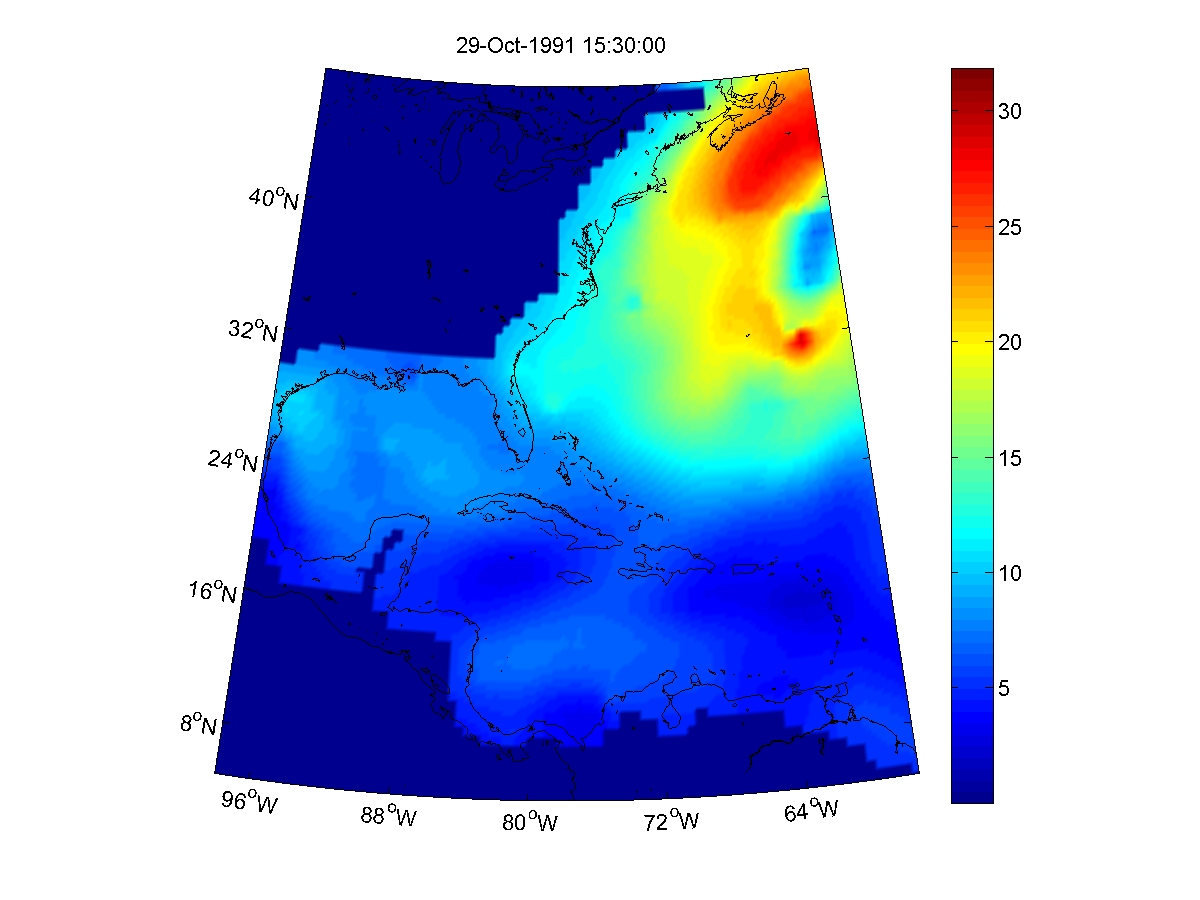
Map of winds during the Perfect Storm of late October, 1991. Color shading shows wind speed (in meters per second, roughly double it to get knots or mph).  The storm caused what has been estimated as “500-year” flood elevations storm surge for Boston.

A storm with similarities to the Perfect Storm of 1991 is expected to come northward by early next week and may make landfall in the Northeastern U.S. or Canadian Maritimes.  Some have been mentioning that the storm would arrive near the full moon and thus spring tide, so I wanted to make a quick post explaining that predicted the tide ranges for the New York City region aren’t going be too bad during this period.

Total water elevation at the coast, called the “storm tide”, is driven up by winds and low atmospheric pressure (components of “storm surge”), as well as the astronomical tides.  Tides are predictable, as they are driven by the regular periodic orbits of the earth around the Sun and the Moon around the Earth, as well as Earth’s rotation.  The tides predicted to be present early next week are slightly larger than average, due to it being a “spring tide” — a twice-monthly occurrence when the sun and moon’s gravitational forces are working constructively to create larger tides.

However, this spring tide will actually be a weaker one than many, so the tide’s contribution to total water level isn’t going to be as bad as one might think — the tide range for spring tides varies from month-to-month for multiple astronomical reasons.  The tide range will be only a little bit above average, actually — a range of 5.4 feet at Battery Park on Monday Oct 29, in contrast to the last spring tide (Oct 17) that had a predicted range of 6.5 feet.  Average tide range for Battery Park is about 4.9 ft.
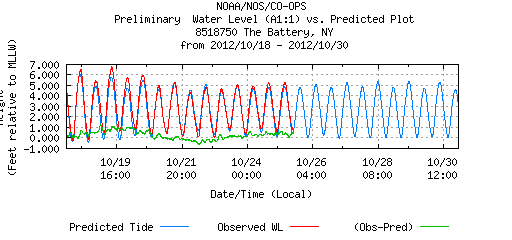
Heights relative to mean-lower-low-water (MLLW; average daily low tide level) — Predicted  (astronomical) tides, observed total water levels (WL), and the anomaly (Obs-pred) at The Battery for October, 2012.  The anomaly is mainly storm surge but can also include rainfall, freshwater from river inputs, and other minor influences.

There is still a great deal of uncertainty on where the storm will hit, and how big a storm surge will be driven up by its strong winds.  If the storm ends up approaching our region, people can visit http://stevens.edu/SSWS for water elevation predictions, and this blog for commentary and interpretation.
Posted in water, weather | Tagged , , , , , , , , , , , , , | Comments Off on Spring Tides and Perfect Storms

NYC’s Ultimate Locavore Food: Blue Crab

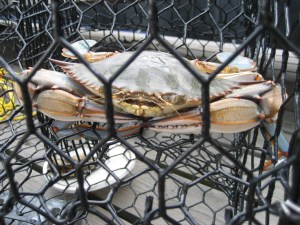
Angry blue crab caught in the Hudson River, later dusted with Old Bay, steamed, eaten by the author

How often do you eat Tuna per month?  Well, let me introduce you to a seafood that has dramatically lower pollution levels in its flesh, and comes straight from our local waters:  The humble blue crab.  Not only is it far better for the environment than eating fish that are caught by boats that must motor hundreds of kilometers out to sea (tuna), you can walk down the street and lay traps for tonight’s dinner.

So let’s get this pollution thing out of the way up front — one polluted fish is no better than another polluted fish, right?  Local blue crab advisories suggest people eat no more than 6 crab per week, while tuna typically has a recommended maximum of about only a few servings per week.  In both cases, they recommend women of childbearing age avoid eating them.  So where am I going with this?!?

Well, published pollution measurements (PCBs) show that the flesh of blue crab has far lower pollutant levels than the gut (0.03 ppm versus 6.55 ppm), and lower than any other seafood tested in the harbor’s waters (get book chapter here, Chapter 28, Table 28.1).  The method used to determine maximum serving numbers uses the entire organism, so neglects the fact that the pollution in different parts of the fish can vary.  So, eating blue crab from the region’s waterways is actually relatively safe, as long as you only eat the white flesh.  The bottom line is that these are short-lived species and they do not bioaccumulate pollution in their flesh like large, long-lived fish do.

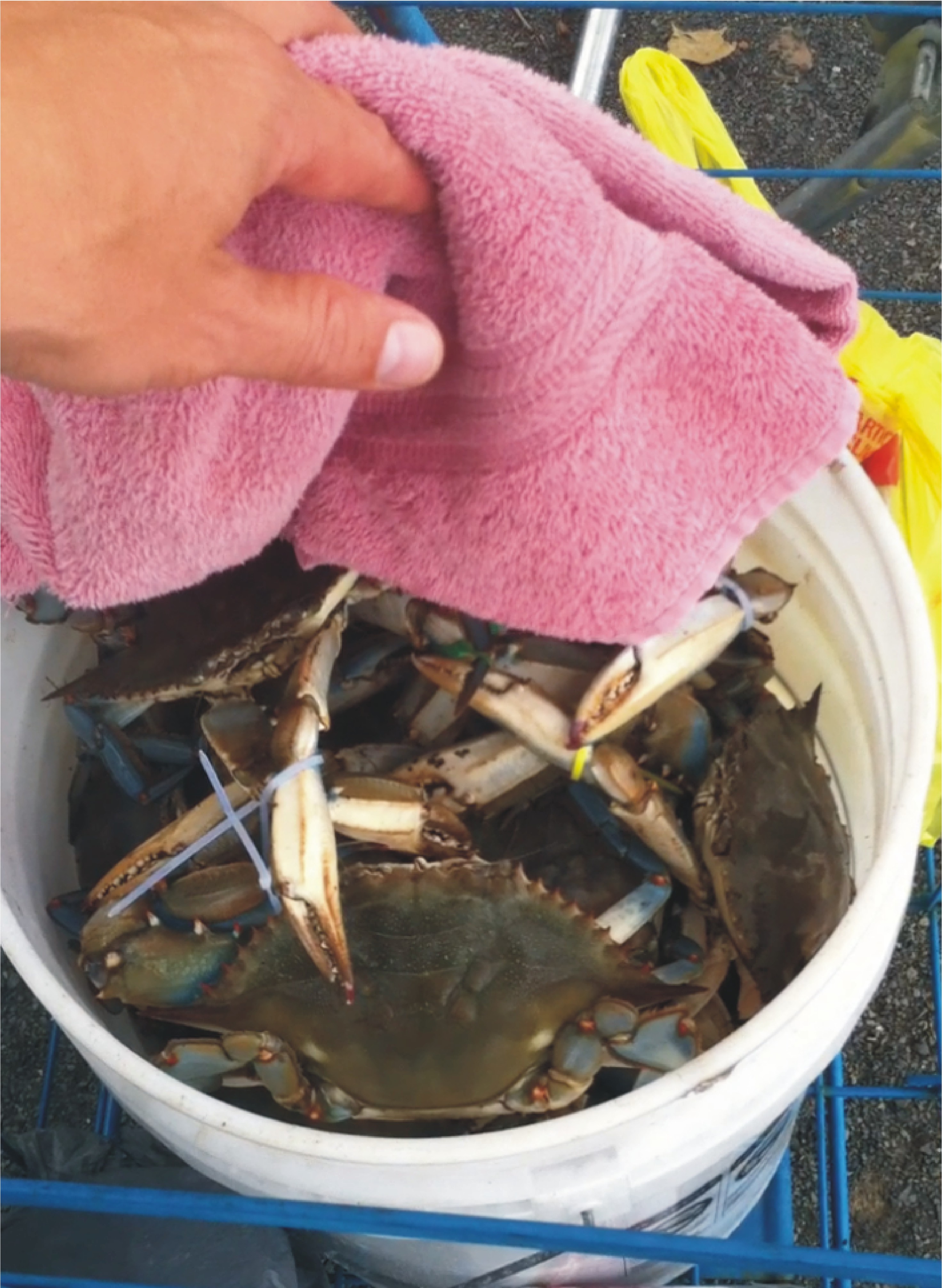
A full bucket of blue crabs caught by an urban fisherman on a Hoboken pier at the edge of the Hudson River, September 27, 2012. He used six 10″ traps and spent five hours fishing.

Granted, pollution isn’t just about bioaccumulation, PCBs or mercury, it can also be pathogens that immediately make you sick.  To avoid this, one should make sure the crab flesh is  adequately cleaned (perhaps boil, not steam?) and avoid fishing within 2-3 days after rain events, when combined sewage overflows occur in many of our waterways.

None of this is terribly new … blue crab from our waters have been pawned off as Chesapeake blue crab due to their greater availability and size, as reported by the NY Times in 2006 (PDF: NYTimes 2006).  And in many ways, it’s only been a question of where exactly you fish — many of the clams you purchase in the area are from the Hudson’s mouth, Raritan Bay, and are simply stored in clean waters for a few weeks before sale.

Personally, I’m not eating East River blue crab every week.  I bought a new trap and have tried a few times at Hell Gate, near my apartment (my large crabpot doesn’t fit so well in an apartment, so it’s at NY Harbor School helping educate kids on Governor’s Island).  But I am learning more and cautiously optimistic that our continuing water quality improvements and recovery from past decades of heavy pollution will make it safe to eat blue crab more and more frequently into the future.

Posted in locavore, water, water pollution | Tagged , , , , , , , , , , , , , , , | 5 Comments

Re-Awakening the American Meteorological Society’s NYC Meetings

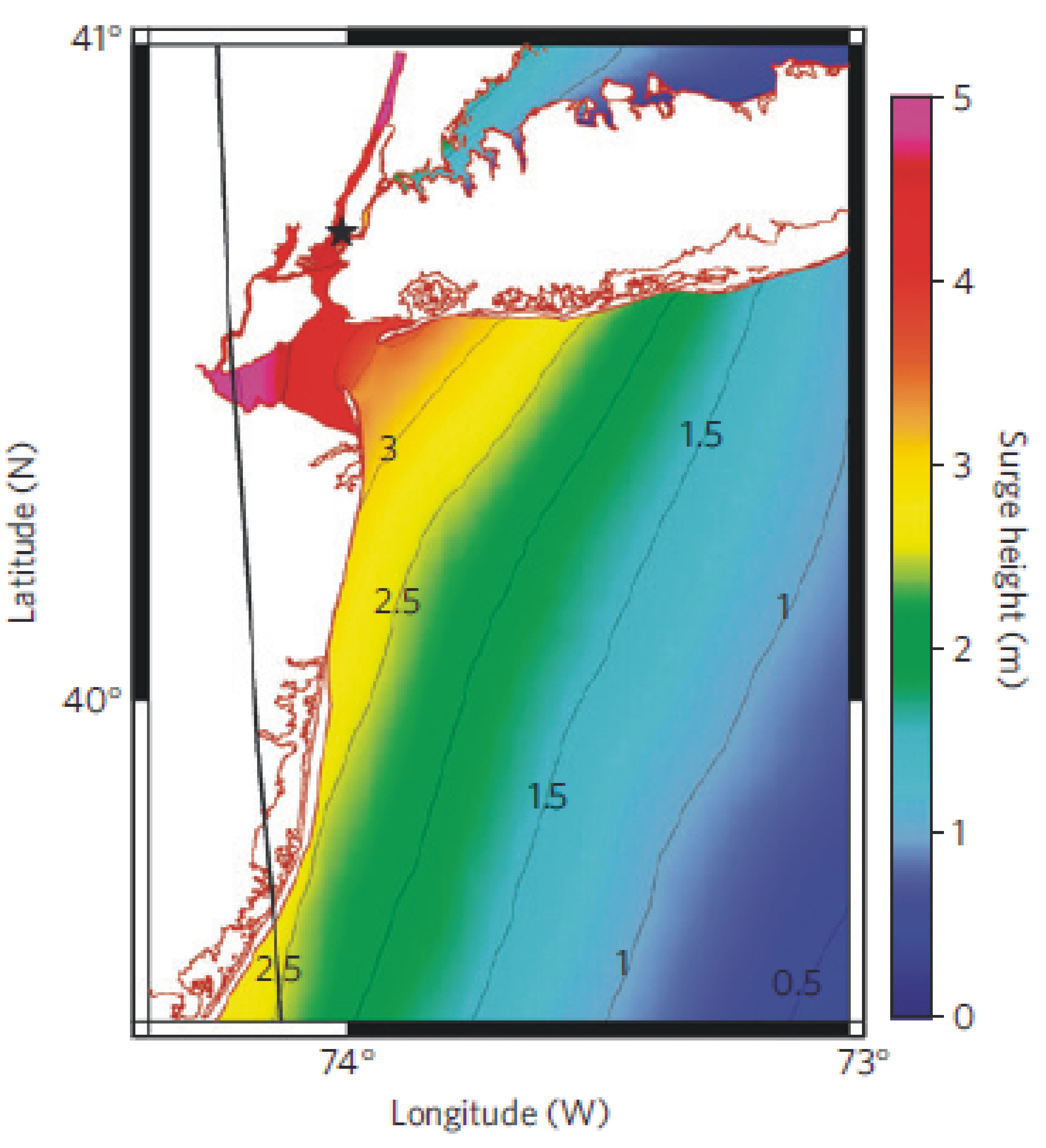
A worst-case hurricane storm track and surge at New York City, from Lin et al. Nature Climate Change, 2012 DOI:10.1038/NCLIMATE1389.

A few of us are re-awakening the long-dormant public NYC seminar series of the NYC / Long Island chapter of the American Meteorological Society, with 1-2 evening events held per semester at Columbia University.  The webpage for seminars is:

http://apam.columbia.edu/ams-nyclong-island-chapter-seminar

The first event will feature Kerry Emanuel, professor of atmospheric science at Massachusetts Institute of Technology, speaking on “Assessing storm surge risk at New York City”.  There will be 1-2 events per semester, covering topics ranging from atmospheric science, physical oceanography, meteorology, climate, hydrology, and so forth.  The event will be followed by a one-hour reception.  Reply to this post if you’d like be added to the attendance list!

Kerry Emanuel

Professor of Atmospheric Science
Massachusetts Institute of Technology

“Assessing Storm Surge Risk at New York City”

Thursday, November 15, 6:30pm
Columbia University
Davis Auditorium, 412 Shapiro Center *
530 W. 120th Street, New York, NY
(between Broadway & Amsterdam)
* To reserve a spot, reply below

Reception immediately following

Sponsored by Columbia University’s Fu Foundation School of Engineering and Applied Science

Biography

Kerry Emanuel is a professor of atmospheric science at the Massachusetts Institute of Technology, member of the National Academy of Sciences, and winner of the Carl Gustaf Rossby Research Medal from the American Meteorological Society, its highest honor. He is most well-known for his work on ocean heat and tropical cyclones, and more recently on relating this to climate change. He is currently primarily working on various aspects of moist convection in the atmosphere, and on tropical cyclones. He is interested in fundamental properties of moist convection, including the scaling of convective velocities and the nature of the diurnal cycle of convection over land. His group has developed a promising technique for inferring tropical cyclone activity from coarse-grain output of climate models or re-analyses.

Posted in climate, water | Tagged , , , , , , , , , , , | 29 Comments

Presenting Wednesday: Impacts of Irene & Lee on the Hudson

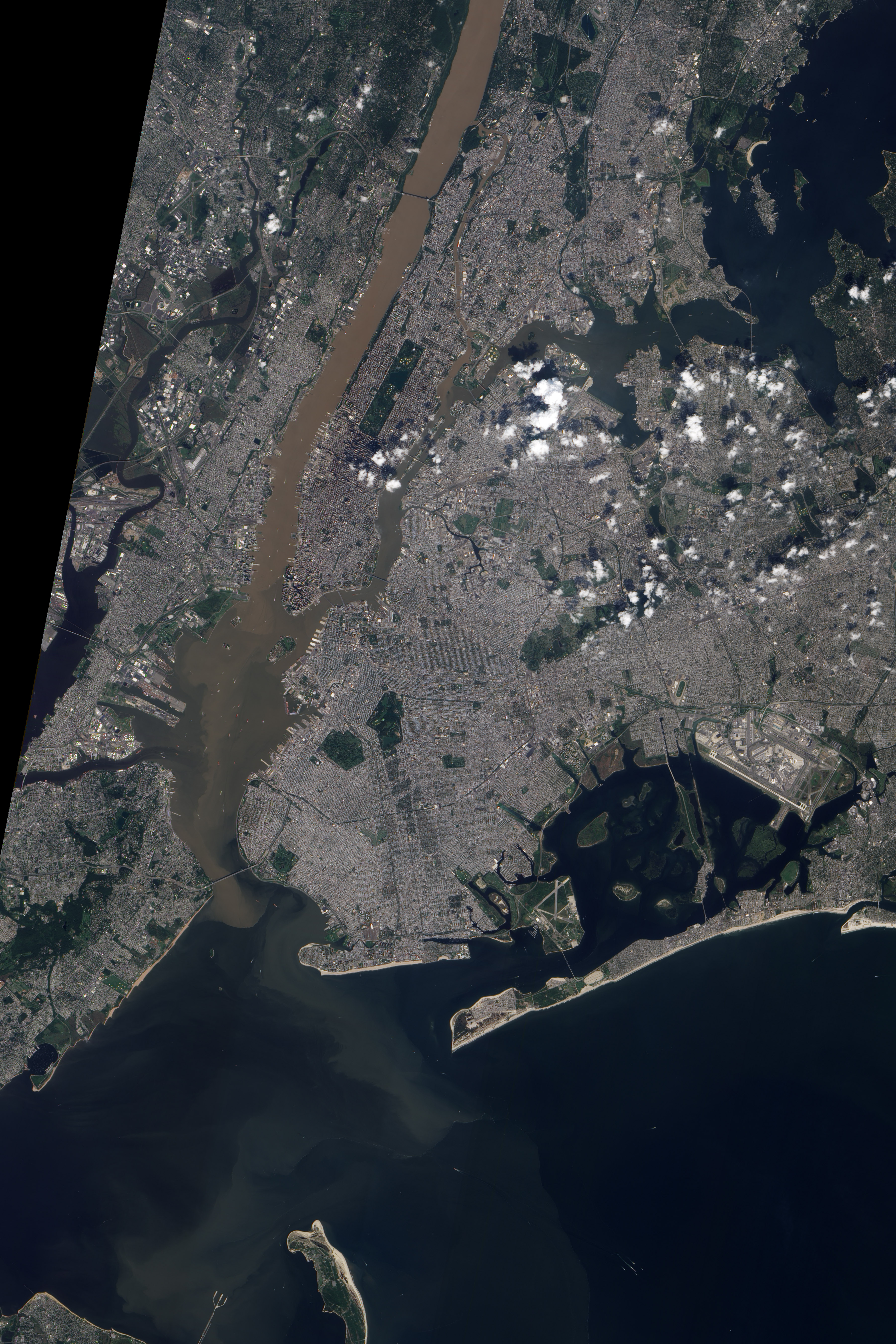
Satellite photo of NYC area with a muddy Hudson River

Experts gather to outline and analyze the historic combined effect of the two storms

by Craig Wen, Stevens Institute of Technology

During a torrid week in 2011, cities and communities along the Hudson River were hammered by Tropical Storms Irene and Lee, causing $1.5 billion in damage and creating conditions so unique that scientists and researchers are still studying the effects a year later. On September 19 at Cary Institute in Millbrook, Dr. Philip Orton, Research Scientist for the Center for Maritime Systems at Stevens Institute of Technology, will give the opening talk at a conference hosted by the Hudson River Environmental Society (HRES), where experts in meteorology, hydrology, sediment transport, and biology will come together and share their research on the impacts of Irene and Lee on the Hudson River.

“The unparalleled location of Stevens on the Hudson River allows our experts access to some of the most complex and dynamic waterways in the world,” says Dr. Michael Bruno, Dean of the Charles V. Schaefer, Jr. School of Engineering and Science. “We are pleased that the Hudson River Environmental Society has asked Dr. Orton to give the introductory science talk summarizing the storms and their effects.”

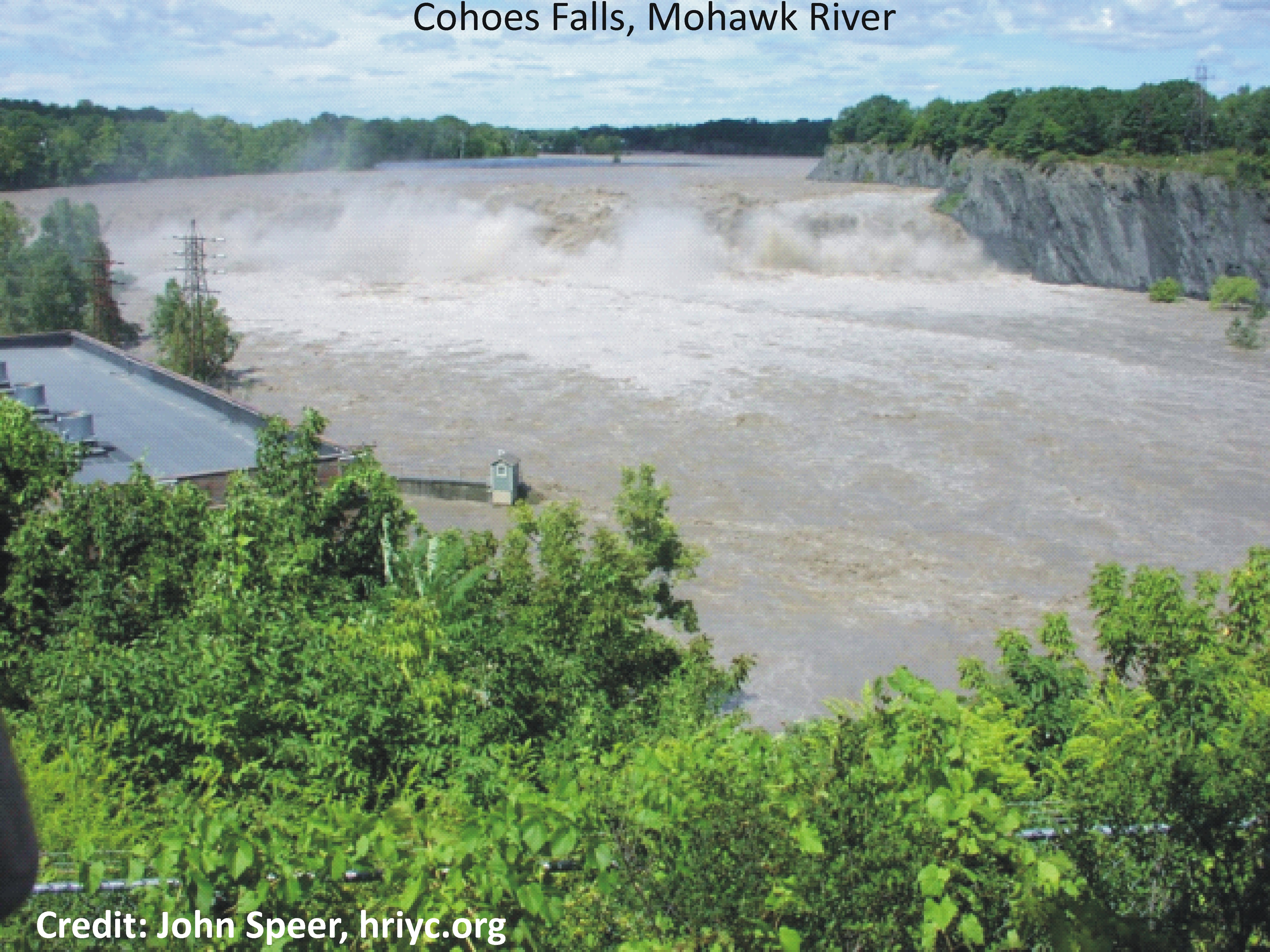
The Hudson River runs 315 miles through New York State and has a profound impact on major population areas from Albany down to New York City. Dr. Orton will discuss how heavy rain and high storm surges from Irene and Lee affected the Hudson’s characteristics and surrounding ecosystems. The summary rainfall of both storms was between 12 and 18 inches within the Hudson Valley. “The cumulative effect of Irene and Lee was a once-in-a-hundred-year event,” says Dr. Orton. “Irene dropped so much rain in so little time, nearly all the salt was washed from the Hudson River estuary southward of Manhattan, and there was only a brief return to brackish conditions before a second storm, Lee, nearly did it again a week later.”

At the conference, he will also detail a more comprehensive understanding of flooding around the Hudson River, by quantifying and demonstrating how the flood waters from coastal storm surges and inland rain merged. Understanding this merging flood allows researchers to better understand the impact of future sea level rise as well as potential increases in storm intensities and rain rates on flooding along the Hudson.

The New York Harbor Observing and Prediction System (NYHOPS), developed at Stevens, and the Hudson River Environmental Conditions Observing System (HRECOS) provided Dr. Orton with observations and computer model simulations that he used to study the storms’ effects. Water elevation, salinity, and direction and speed of water currents are among the many properties NYHOPS displays using real-time data and model forecasts, making it an invaluable tool used by researchers, boaters, the shipping industry, Coast Guard and many others.

“Dr. Orton’s research on the Hudson River and surrounding New York area waterways is an excellent foundation for the Hudson River Environmental Society conference,” says Dr. Alan Blumberg, director of the Center for Maritime Systems. “His enthusiasm for all things ocean-related is contagious and will be an excellent catalyst for a valuable and engaging conference.”

“Many people are surprised an oceanographer would thrive in New York City, but I find it an ideal location,” says Dr. Orton. “The area is very diverse, with estuaries and tidal straits of every kind running through or nearby New York City, making it perfect for my research and interests.” He has researched oceanography for 16 years, studying air-sea interactions, storm surges, biophysical oceanography, turbulent mixing, sediment transport, and ocean acidification and carbon dioxide.

Posted in water, weather | Tagged , , , , , , , , , , , , | 1 Comment

Birds-Eye and Fish-Eye Views of Irene’s Floodwaters

Approaching the anniversary of last year’s landfall in New York City of Tropical Storm Irene, I decided to make some animations of that storm’s flood elevations and water currents.  The model-based animations have voice-overs explaining what happened in the water during Irene’s journey past New Jersey, New York City and up the Hudson River.  The first animation linked below is a “birds-eye view”, or plan view, showing first, storm surge height, and second, total water elevations caused by tides and storm surge.  Note that the time is shown at the top, and it progresses from August 27th through 29th and it “loops” multiple times.

Click on me for animation!

Click to see animation of plan view of modeled tropical storm Irene (1) storm surge and (2) total water elevations, with voice-over, August 27-29, 2011. Based on model runs using Stevens ECOM, the model used for Stevens Institute’s Storm Surge Warning System.

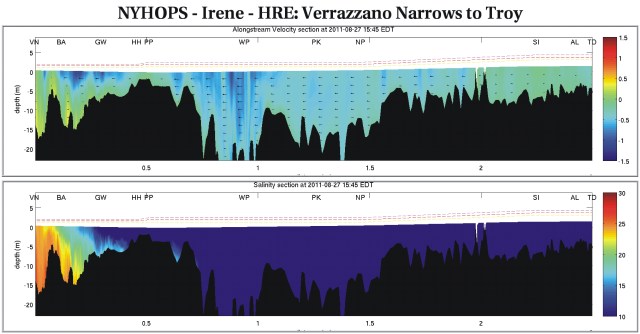
The next animation is a “fish-eye view”, or really a section view, looping from August 27th mid-day to August 29th mid-day, showing total water elevation, water velocity and speed, and water salinity (salt content, from 0 to 35 parts per thousand), demonstrating how the rainfall confluence in the Hudson River eventually washed it’s usual estuarine mix of seawater out completely south of Manhattan:

Click to go to Irene animation

Click to go to Irene animation with voice-over for the Hudson River, section view from Verrazano (left side; ocean end) northward to Albany (right side; river end).  Black areas are below the river bed.  Colors are defined in the titles and color bars on the right, with the top panel showing water velocity (positive for up the Hudson) and bottom showing water salinity.  Total water elevation is the vertical level of the color-shaded regions.  The dashed lines show the minor and moderate flooding benchmark elevations — generally where water spills over sea walls.

We  just published a research paper on the storm tides across the tri-state area in the Journal of Geophysical Research.  The article, “Detailed Modeling of Recent Severe Storm Tides in Estuaries of the New York City Region,” provides a summary of water elevation measurements in waterways around New York City during Hurricane Irene, which brought strong winds, heavy rainfall and near record-breaking storm tides to New York, New Jersey and Connecticut.  Also, by conducting a series of in-depth modeling sensitivity experiments on eight tide stations, we contrast the accuracy of our computer-based storm surge forecast model, the Stevens Storm Surge Warning System, with multiple simplified versions of the model that emulate other commonly-used storm surge models.

Posted in water, weather | Tagged , , , , , , , , , , , , , , , , , , , | 1 Comment

Baseline Air Quality Measurements at Asphalt Green

As summarized in a prior post, we are now collecting air pollution data at the site of the proposed marine garbage transfer station (MTS) at East 91st Street in Manhattan.  The site is next to Asphalt Green, a large community center used by thousands of children for outdoor recreation.  Below is the initial three weeks of data, and we will continue to collect data on the atmospheric fine particulate concentration (PM2.5) so we can see how it changes if the MTS is built and begins operations.

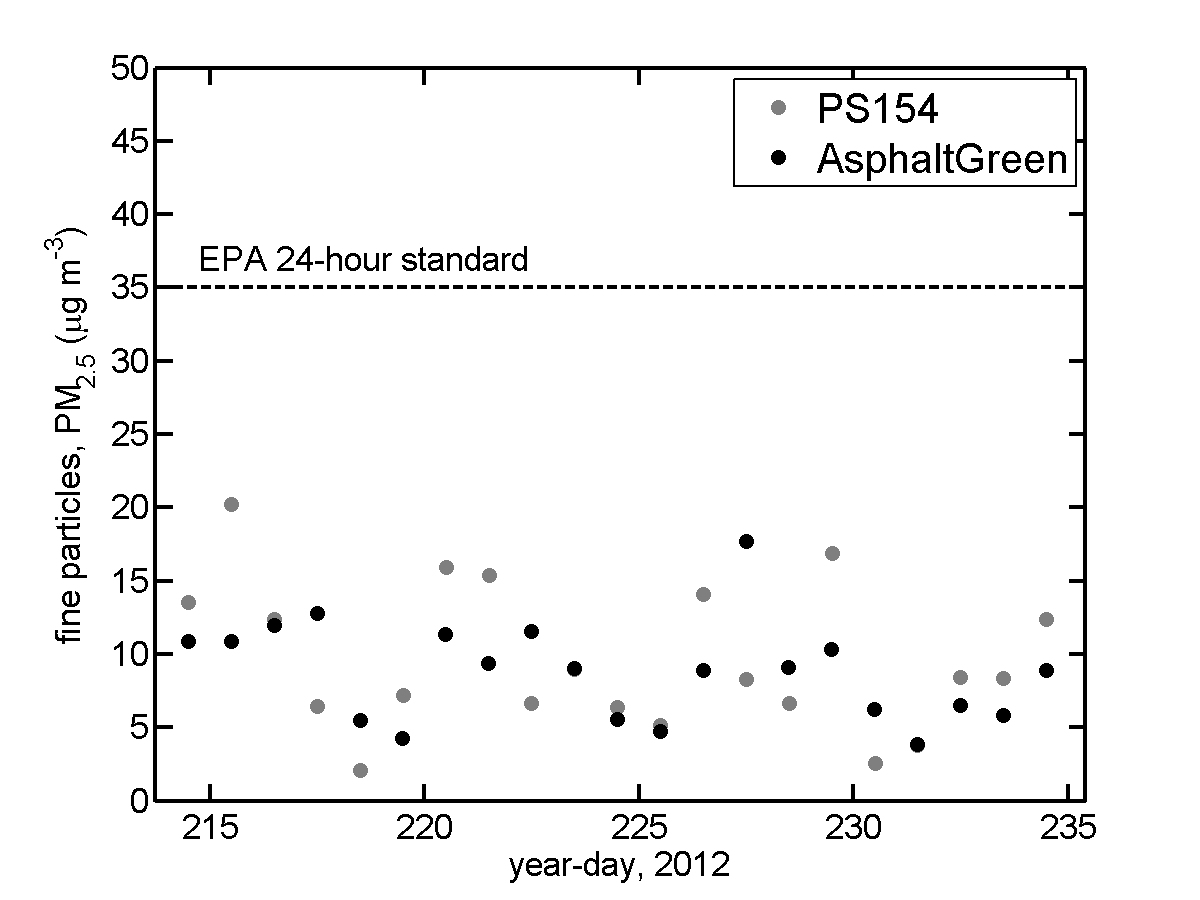
Daily average concentrations of atmospheric fine particles in micrograms per cubic meter at Asphalt Green, from August 2-23, 2012. Data from a school in South Bronx (PS154) are shown for comparison. Concentrations at both sites did not exceed the EPA standard for a 24-hour average.

One primary question with the MTS is whether or not it makes air pollution worse, and these baseline data will help address that question.  If air quality significantly worsens, the data can be used to help push the city or state DEC to change operations at the MTS.

Broader datasets of air quality including ozone and other constituents can be viewed and even downloaded from the NY State DEC.  The Aero-212 sensor we are using is not as high-quality (expensive) as the ones used by the DEC, but the figure above shows a good correlation between two nearby (a few miles apart) stations.  The future goal is to get the data online in real-time for the public, perhaps as part of our Urban Ocean Observatory website.

It’s good to see the concentrations measured so far have not been close to the EPA standard of 35 micrograms per cubic meter.  According to the EPA: “Fine particles, such as those found in smoke and haze, are 2.5 micrometers in diameter and smaller (1/30th the diameter of a human hair).  These particles can be directly emitted from sources such as forest fires, or they can form when gases emitted from power plants, industries and automobiles react in the air.  Health studies have shown a significant association between exposure to fine particles and heart and lung disease, cardiovascular symptoms, respiratory symptoms, asthma attacks, and bronchitis.  These effects can result in increased hospital admissions, emergency room visits, absences from school or work, and restricted activity days.  Individuals that may be particularly sensitive to fine particle exposure include people with heart or lung disease, older adults, and children.”

Posted in air pollution | Tagged , , , , , , , , , , , , , , , , | Comments Off on Baseline Air Quality Measurements at Asphalt Green

What Effect Would Stopping the Flow Have on Ironman?

Westchester County officials say that repairs on a broken pipe are almost complete and they hope to stop discharging sewage into the Hudson River by Friday afternoon.  So, what effect would shutting it down have on pathogen concentrations near George Washington Bridge (GWB) and the Ironman triathalon swim tomorrow morning?

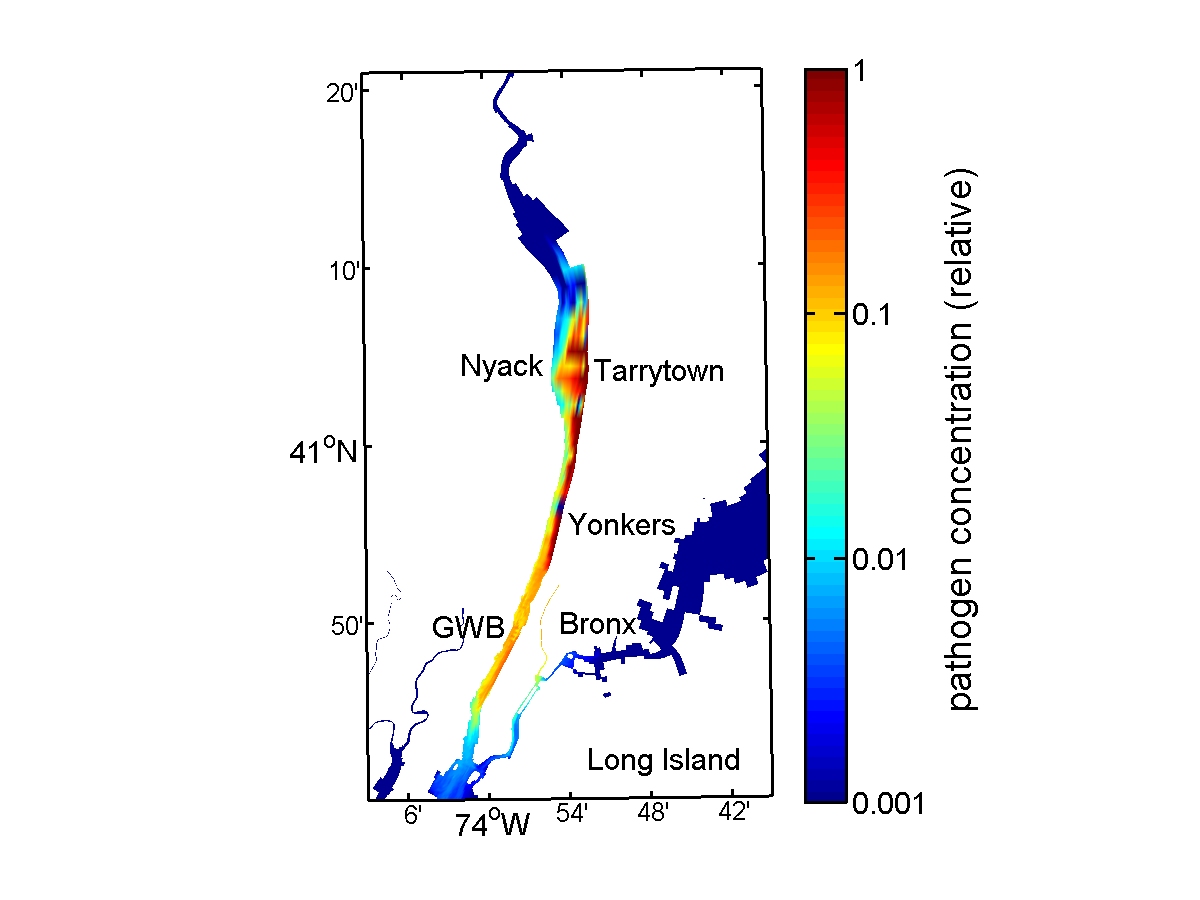
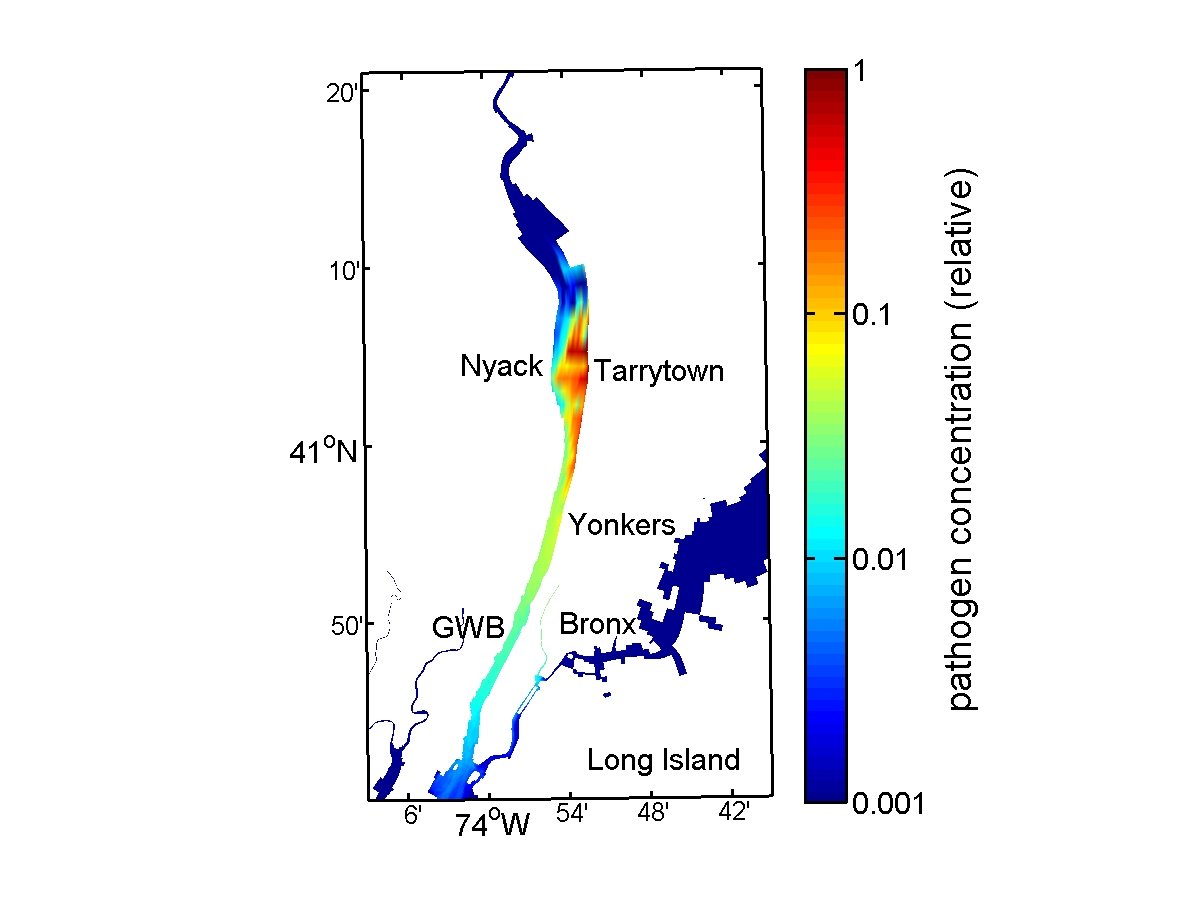
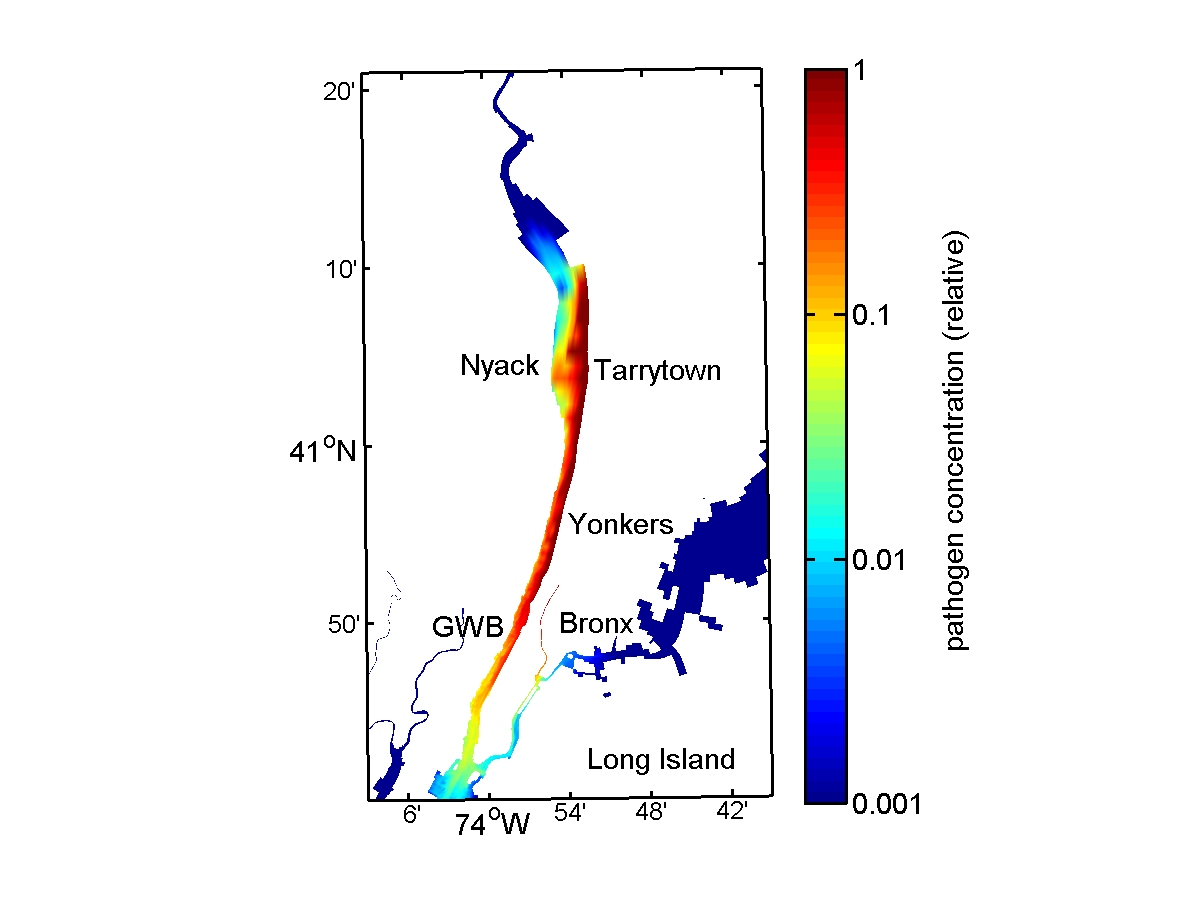
Here, back-to-back, are forecast maps for Saturday morning with (top) the same sewage pathogen simulation summarized in my last post, and (bottom) a simulation where the spill ends today at 1pm.  It looks like a factor of 5 reduction at GWB, roughly … which would help.

Sewage pathogen concentrations in surface waters Saturday morning for a continual spill (maximum from 6-9AM at each location), relative to a value of 1.0 Thursday afternoon in the region offshore of Tarrytown, NY.

Sewage pathogen concentrations in surface waters Saturday morning for a spill that stops at mid-day Friday (maximum from 6-9AM at each location).

However, as mentioned in the prior post, we do not have hard data to know what “relative concentration” exactly means for human health.  Governments tend to keep the actual spill data close to their chest, due to financial liabilities (they can be sued for spilling).

One clear conclusion is that stopping the flow today can help reduce the threat tomorrow.  This is because the pathogens die off and disperse rapidly, with a typical removal time scale of 1-2 days.  Combined sewer overflows that occur during rainfall events cause high pathogen concentrations for 1-2 days, though Riverkeeper has shown that rainfall isn’t a simple predictor.

Posted in water, water pollution | Tagged , , , , , , , , , , , , | 8 Comments

Tracing the Sewage Plume and Impact on the Iron Man Swim

There’s nothing that says summer like a raw sewage leak into one of New York City’s major rivers.

There was another sewage spill in the Hudson, this time due to a broken pipe and resulting diversion into the Hudson at Tarrytown, New York.  A smaller part of the flow is also being routed into the river from Yonkers.  The volume is about 2.7 million gallons per day, about 30 times less than the North River Wastewater Treatment Plant spill in July 2011. The “product” is being chlorinated, which fortunately greatly lowers the dangerous pathogens put into the river.

One of the big questions is whether this will cause a cancellation of the swim leg of the national championship Ironman triathalon that takes place near George Washington Bridge (GWB) early Saturday morning (August 11th).

So, I dusted off our model’s pathogen tracer module, and here is a pathogen forecast through Saturday, covering the area’s waterways.  The “model” is the Stevens Institute of Technology Estuarine and Coastal Ocean Model (sECOM), as applied to and validated for the New York Harbor Observing and Prediction System (NYHOPS).

Maximum sewage pathogen concentrations in surface waters from Wednesday through Saturday, relative to a value of 1.0 in the region offshore of Tarrytown, NY. A full movie of the 4-day simulation is linked from the next figure, below.  The maximum is taken over time, separately at each location.

The simulation shows how dilution and mortality reduce the concentration of pathogens from an unknown concentration (assumed 1.0) in the Hudson near Tarrytown and (assumed 0.1) near Yonkers.  The sources are linearly ramped up from zero on Wednesday, to these constant values from the evening all the way through Saturday.

(UPDATE 8/10 1:20PM: To also take a more optimistic viewpoint, I’m have also now done a model run now where the sewage gets shut off at mid-day Friday — this helps reduce the concentrations roughly 5x lower for Saturday morning).

Here is the animation of the entire four-day period…

Click on the figure to go to Vimeo for a full animation of the 4-day period.

The main conclusions I draw from the simulation are:

  • The transport is strongly influenced by the tides, which reverse every ~6.2 hours
  • However, mixing spreads the plume out broadly after a few days, and the tidal effect no longer dominates – saying “the tide direction is all that matters”, which I’ve read in some news reports, is a bad idea
  • The transport is also strongly influenced by the net river outflow, so the center of the plume on average moves more southward than northward
  • The cross-channel transport from the east to the west (and the Ironman course) is intermittent
  • Discrete water pathogen sampling may “miss” the highest concentrations and mislead organizers on the safety of the water, especially if one must wait 24 hours for incubation of the samples

At this point, this is a purely volunteered effort.  As we have no means for estimating the source concentrations, we cannot put absolute units or judge these results relative to safety guidelines.  The various counties and cities Departments of Health are in charge of making decisions on public safety, and they are taking observations that are the final word for determining where beach closures and swimming bans are necessary.  So one should consult the Westchester County DOH website, Rockland County DOH website, NJ DEP water sampling website, and NYC Dept of Health website for questions of water safety.

However, the ability of these organizations to inform the public of events as they happen, or as forecasts, is somewhat limited because observations of sewage indicators require 24-hour incubation periods and the water samples are collected at arbitrary times and locations that may not capture the actual exposure of swimmers on Saturday.  The most useful next step is to begin incorporating actual sewage outfall data into our NYHOPS model, enabling us to provide water quality nowcasts and forecasts for the region’s waterways and swimming areas.

Our poster from the “Clean Water Act at 40 Conference” at Vassar College last spring summarizes the sewage pathogen forecast concept and modeling of the North River treatment plant fire spill:  Orton_etal_CWA40_V4.

Posted in water, water pollution | Tagged , , , , , , , , , , , , | 3 Comments

Do Property Taxes Pay Back Wastewater Infrastructure Costs?

Today, while river advocacy groups are celebrating the 40th anniversary of the Clean Water Act with Swimmable Action Day, I’m reflecting on the economics of these efforts to reduce sewage pollution.

Often when I read anything truly descriptive about what it was like to be on the historic waterfronts of New York City or Hoboken in the middle of the 20th Century, I read about the sulfurous smells of decaying, waterborne human waste.  Because the area waterways are saline and not usable for drinking water, it was actually the putrid smells that drove NYC to take the first steps toward wastewater treatment.  If you look at old waterfront buildings in NYC or places like Chicago River, they never aim toward the water because it was an open sewer — it’s clear that these were not places for luxury living.

This all gradually changed over the last half of the 20th Century, as NYC increasingly treated its sewage and improved its water quality.  So I wonder, given that our waterfronts are now focal points of city recreation, tourism and high-priced real estate — could advocates and scientists do a better job of “selling” the great benefits that the Clean Water Act has already had to the public?  Riverkeeper does a great job of defending and advocating for clean water infrastructure based on public health, and that is a relatively easy way to get people’s attention.  But when it comes to making million or even billion dollar investments in grey infrastructure (e.g. sewage treatment plants and pipelines), it has become a harder sell and people often begin to wonder if it’s worth the costs.

So, thinking purely from a government budgetary perspective, which could help motivate future investments in grey or green infrastructure — how has the economics of clean water played out?  Or specifically for cities — compared with the billions of dollars spent on infrastructure in cities like New York, what increase in tax base has come from eliminating most of the floating sewage, oxygen-deficient water, and bad smells?

This question doesn’t only look at the future of sewage pollution in the U.S., and how it can be improved, but it addresses the question for the rapidly growing urban populations of the rest of the world, many of which are just getting started — do massive investments in wastewater treatment pay for themselves purely through aesthetics, or do they also need to be justified on human and environmental grounds?  If one can prove they pay for themselves through waterfront property taxes or health improvements, it would be a powerful motivator globally for taking better care of our waste.

I did some literature searching online in the area of environmental economics, and learned how it’s difficult to study the topic because one would need to separate differing historical influences on property values.  For example, with NYC waterfronts, the move from industrial uses to residential has probably been an even larger force in raising the property tax base.  So, perhaps a starting point is to simply look at property taxes for all waterfront residences in Manhattan, and then make an assumption that some percentage of that increase is due to clean water (10%?), just to get some idea of what kind of dollars we’re talking about.

I’m guessing there might be 100,000 people living on the waterfront in NYC, with perhaps $10,000/year/person of property tax, so over a 100-year period (infrastructure lifetime) this land might raise on-the-order-of 100 billion dollars in property taxes.  Increasing this by 10% is 10 billion dollars … but this is a very simplistic analysis, of course.

Do you have access to property tax data, or can you make a back-of-the-envelope calculation?

Posted in opinion, water pollution | Tagged , , , , , , , , , , , , , | Comments Off on Do Property Taxes Pay Back Wastewater Infrastructure Costs?

Monitoring Air Quality, Empowering Communities

Would you stand in front of a truck to stop injustice?

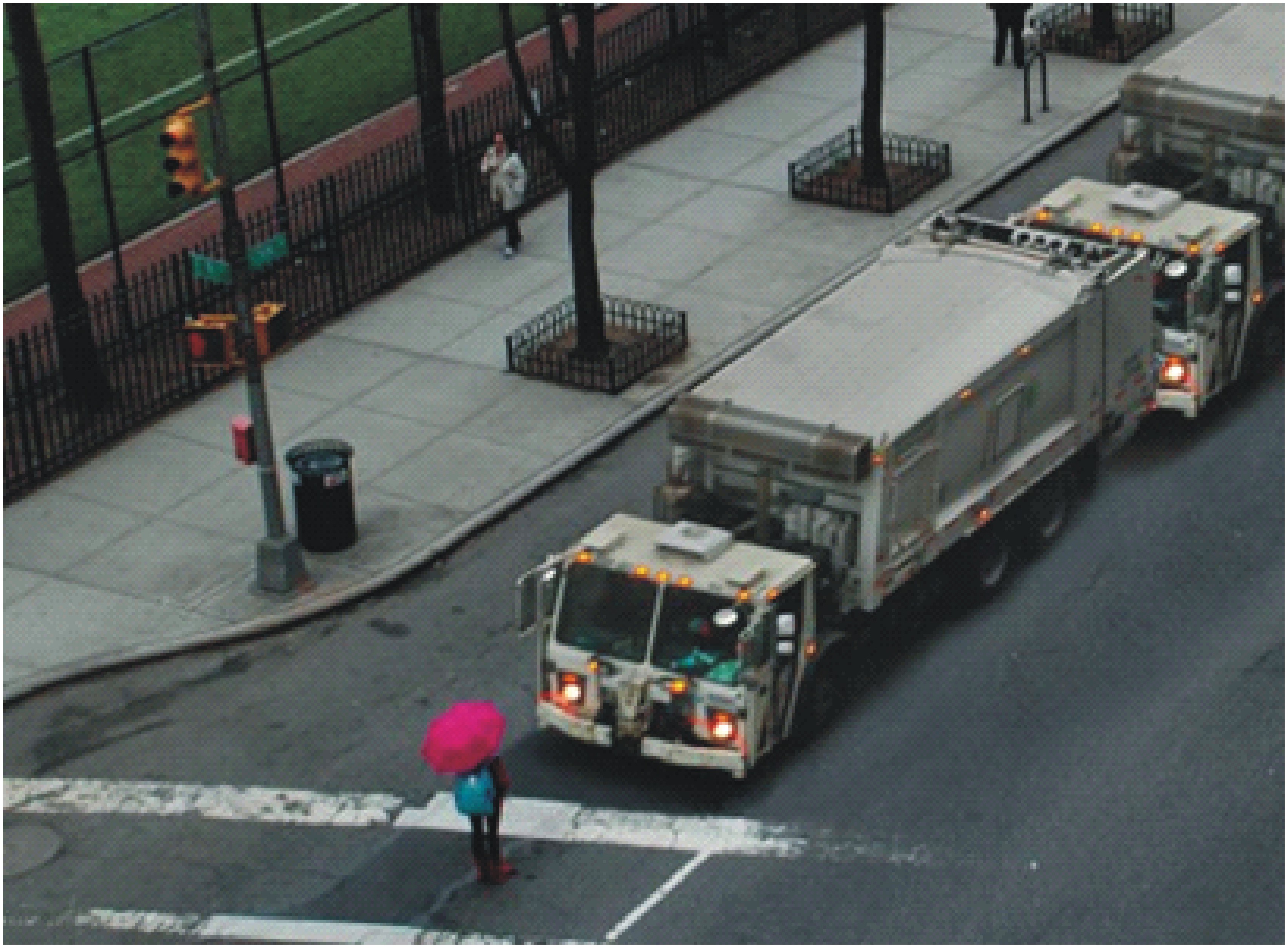
If you were pressed to contemplate such an extreme action, wouldn’t you want to have accurate information first on how serious of an injustice was being committed?  I certainly would, and that is why our research group at Stevens Institute is partnering with students to collect air pollution data at the site of the proposed marine garbage transfer station (MTS) at East 91st Street in Manhattan.  The site is next to Asphalt Green, a large community center used by thousands of children for outdoor recreation.  We are looking forward to providing high school students from the community with detailed data on air quality and how it changes if the MTS is built and begins operations.  [NOTE: initial measurements are online now in a new post].

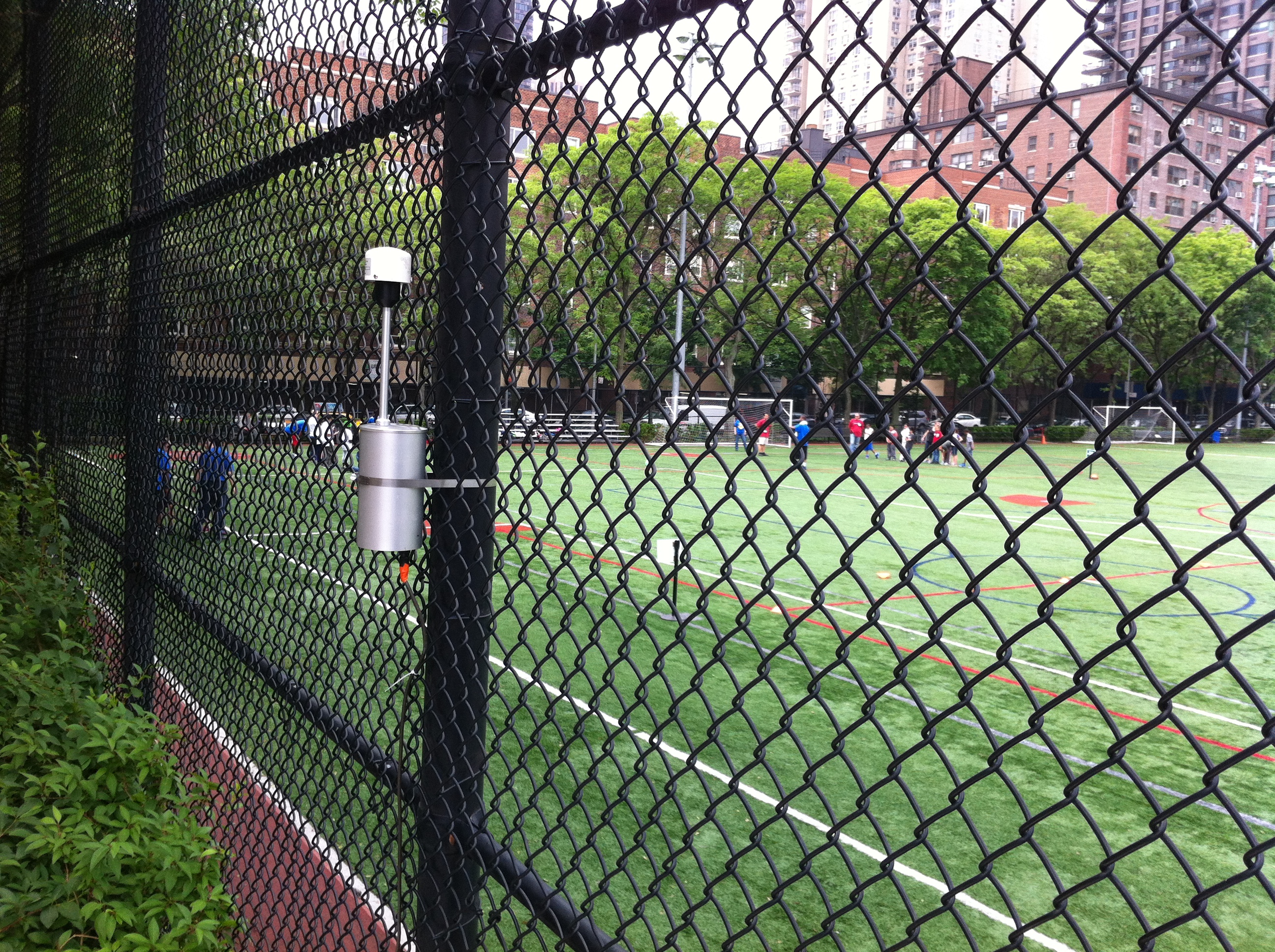
Met One Aero-212 atmospheric particle counter deployed at Asphalt Green

One primary question with the MTS is whether or not it makes air pollution worse, and this can be evaluated very simply by local students using the data we collect.  If air quality significantly worsens, the data can be used to help push the city or state DEC to change operations at the MTS.

Special Condition No. 45 in the NY State Department of Environmental Conservation (DEC) permit for the MTS holds that the garbage trucks must have the “best available retrofit technology certified to achieve reduction of diesel particulate matter emissions by 90 percent or greater.”  However, it appears that if the city outsources the garbage collection to outside parties, which has been mentioned as a possible future plan, they will have no control over truck emissions.  Also, Condition No. 36 of the combined draft permit bars garbage trucks from queuing on public streets outside the facility (permits and hearing summaries are available here).

Having hard data that shows worsened air pollution could help force The City to switch to cleaner, quieter vehicles, and what could be more effective than letting students tell the story themselves?

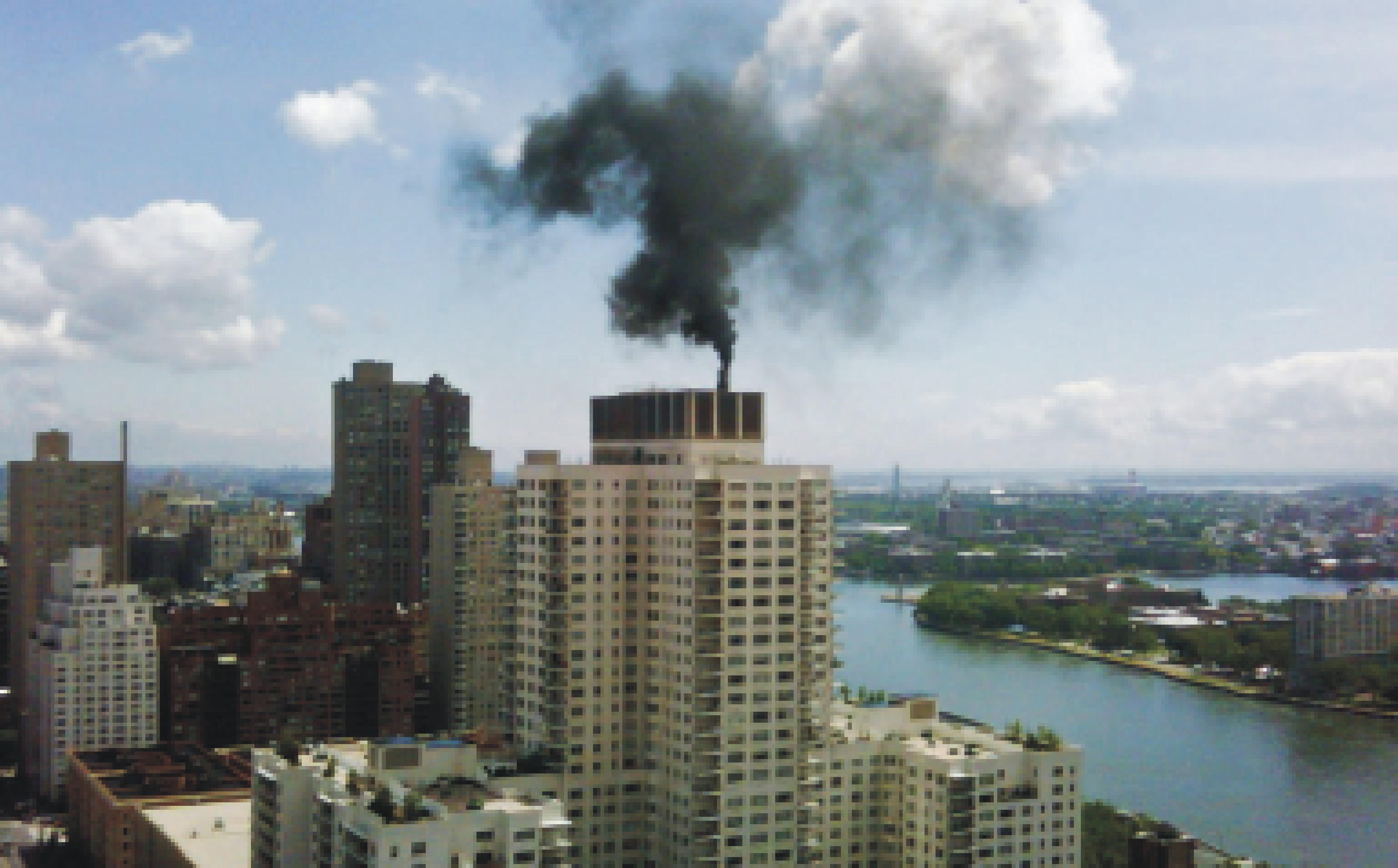
There are other existing sources of air pollution in the area, including heavy highway traffic and buildings that burn dirty fuel oil, which has been shown to be responsible for 50% more air pollution in New York City than that from traffic.

Credit: Environmental Defense Fund / Isabelle Silverman

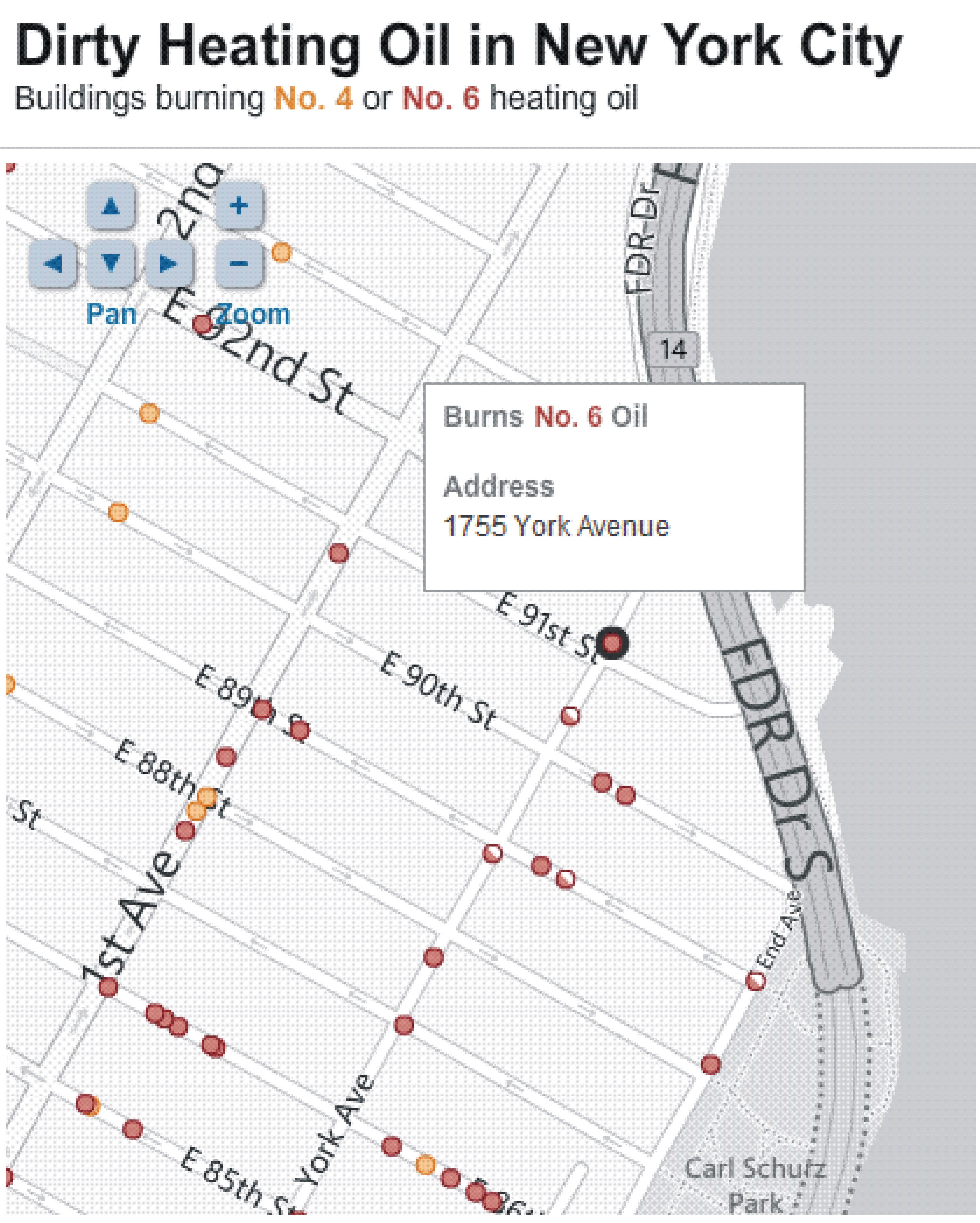
The map below shows buildings still burning dirty fuel oil around Asphalt Green and all those children.  New York City’s PlaNYC 2030 lays out a strategy to reduce air pollution of this sort and achieve the cleanest air quality of any U.S. City.  The building I live in has made the switch to natural gas, so why haven’t the buildings surrounding Asphalt Green followed suit?

Map of buildings burning dirty fuel oil in the blocks surrounding Asphalt Green and the proposed MTS site, from a mapping tool on Environmental Defense Fund’s website.

Not only can the data collected at the site help kids protect themselves from possible air quality deterioration due to the MTS, it can also be used to help identify the relative seriousness of these other pollution sources.  In the case of the dirty fuel oil used by some buildings, the evidence could be used to encourage building owners to switch over to much cleaner fuel sources like natural gas.

Getting back to the issue of justice, there is the thorny ethical question of whether one community should take on the burden of worsened environmental conditions to help others.  However, nonprofit groups addressing injustice related to the siting of environmental hazards like garbage dumps and highways in disadvantaged communities strongly support the MTS and the entire NYC Waste Management PlanEnvironmental groups have also sided with The City due to their wishes for broader reductions in air pollution across the city and globally due to the movement from trucking to marine transportation.

Armed with the data we collect, the community will be empowered to take action to defend its air quality in the future, hopefully preventing anyone from having to stand in the path of garbage trucks.

Posted in air pollution | Tagged , , , , , , , , , , , , , , , , , , , | 1 Comment