Jamaica Bay: What Restoration Steps would you Propose?

In an earlier post, I argued that Jamaica Bay is not New York City’s “crown jewel” and has many problems, such as sewage spills, low-oxygen dead zones, and disappearing marshes and islands.  Hundreds of thousands of people living in neighborhoods surrounding the bay are highly vulnerable to flooding under a hurricane storm surge that could happen tomorrow, as well as to creeping sea level rise.  These are not only environmental problems, but huge problems directly that could affect people’s homes, livelihoods and well-being, and solving these problems would have billions of dollars of long-term benefits.

A $13.5 billion, 30-year state-federal partnership is being implemented to restore The Everglades, and has many benefits for both the economy and the environment of Florida.  New York City has been gaining momentum for a possible injection of federal resources — DOI Secretary Salazar visited recently and asked for ideas on the future of the bay.

What specific actions would you propose, if several billion dollars were available to improve the environment of Jamaica Bay and its surrounding neighborhoods?

I posed this question to several experts on Jamaica Bay, wastewater treatment, and marsh restoration, and received some great input.  Charles “Si” Simenstad, Research Professor and Coordinator of the Wetland Ecosystem Team in the School of Aquatic and Fishery Sciences at the University of Washington, said:

There are multiple major restoration or revitalization projects nationwide, including The Everglades, Chesapeake Bay, San Francisco Bay and Puget Sound, so don’t be afraid to think big.  When contemplating what is possible for Jamaica Bay, you should study the lessons learned from these other projects.  Our Puget Sound Nearshore Ecosystem Restoration Project is very much the “what can you do with a major, well-funded project … that’s strategic!” perspective, and may also be a useful model.

Here are some relevant points we’ve learned from those projects —
* Rather than seeking to re-create original conditions, the only feasible goal you can strive to attain is thus to establish sites that are self-regulating and integrated within their landscapes.

* Initiatives in urban estuaries offer the opportunity for expansion of public understanding, appreciation and even direct involvement in restoration.

* Using external peer review and other ›lessons learned‹ mechanisms, as well as producing white papers and other guidance documents that provide timely dissemination of results to the broader restoration community.

* Employing models – conceptual to hydrodynamic, sedimentological, and ecological – to test hypotheses responses and support adaptive management.

* Be aware that the bay’s response to restoration may alter the structure and composition of component ecosystems in a way that may not be part of the historic template.

Simenstad also more recently submitted a more detailed reply, which I’ve added as a guest blog post.  Alan Cohn, Director of Climate Change Planning for the New York City Department of Environmental Protection, wrote his own guest blog post:

It can start with a rain barrel.  The renewal of the idea that water is a resource, not waste–an obvious concept to a farmer, but one that has escaped the consciousness of many city dwellers whose water starts at the faucet and ends at the drain.  By once again embracing water as a resource, New York City has begun to create a new urban ecology that restores ecosystem services and incorporates nature back into the city.  Green infrastructure and living shorelines are amongst the buzzwords transforming the way we think about our cities’ insides and edges.  The New York City Green Infrastructure Plan and Vision 2020: New York City Comprehensive Waterfront Plan are two recent efforts that challenge the status quo in the coming decades.  Both plans are put into context with the recent update to PlaNYC.

Just like no single energy source known today will stop greenhouse gas emissions and prevent climate change, there is no silver bullet for adapting to it.  A portfolio approach tailored to each city and neighborhood is necessary to prepare for more intense weather events in the future as well as the extreme events that we face today.

In this post, I will briefly highlight the plans and efforts already underway to enhance the environmental quality and resilience of Jamaica Bay and the New York-New Jersey Harbor Estuary.  While these projects were designed with multiple environmental goals, their role for improving climate change resilience should also be realized.  Incorporating these resiliency benefits into sustainability research and planning is an opportunity to add momentum and funding to the many projects that still need resources.  Read more …

One thing I learned in this forum is that there are already multi-billion dollar long-term restoration efforts for Jamaica Bay and surrounding neighborhoods — expensive wastewater treatment expansions and improvements.  But these don’t address the new issue I raised in my prior post — they don’t reverse the changes in the bay that have made its surrounding neighborhoods vulnerable to a hurricane storm surge.  In a related post, I will discuss a possible source of billions of restoration dollars that could help address this vulnerability problem.

If you have an answer of your own, feel free to contribute it below, or email me if you’d like to contribute it as a guest blog, which I’ll link here.

Posted in opinion, water | Tagged , , , , , , , , , , , , , , , , , , | Comments Off on Jamaica Bay: What Restoration Steps would you Propose?

Creating a Climate-Resilient Jamaica Bay

It can start with a rain barrel.  The renewal of the idea of water as a resource –an obvious concept to a farmer, but one that has escaped the consciousness of many city dwellers whose water starts at the faucet and ends at the drain.  By once again embracing water as a resource, New York City has begun to create a new urban ecology that restores ecosystem services and incorporates nature back into the city.  Green infrastructure and living shorelines are amongst the buzzwords transforming the way we think about our cities’ insides and edges.  The New York City Green Infrastructure Plan and Vision 2020: New York City Comprehensive Waterfront Plan are two recent efforts that challenge the status quo in the coming decades.  Both plans are put into context with the recent update to PlaNYC.

Just like no single energy source known today will stop greenhouse gas emissions and prevent climate change, there is no silver bullet for adapting to it.  A portfolio approach tailored to each city and neighborhood is necessary to prepare for more intense weather events in the future as well as the extreme events that we face today.

In this post I will briefly highlight the plans and efforts already underway to enhance the environmental quality and resilience of Jamaica Bay and the New York-New Jersey Harbor Estuary.  While these projects were designed with multiple environmental goals, their role for improving climate change resilience should also be realized.  Incorporating these resiliency benefits into sustainability research and planning is an opportunity to add momentum and funding to the many projects that still need resources.

The New York City Green Infrastructure (GI) Plan proposes stormwater reduction measures that capture rain water where it falls and prevents it from entering the combined sewer system.  The New York City Department of Environmental Protection (DEP) began to implement some of these measures as part of the Jamaica Bay Watershed Protection Plan (JBWPP), and DEP seeks to avoid costly tanks, tunnels, and expansions through additional implementation of GI around Jamaica Bay and its tributaries, as well as citywide.  GI will reduce combined sewer overflow and add trees and vegetation, which have the added benefit of cooling neighborhoods, reducing energy consumption in buildings, cleaning the air, and providing aesthetic and recreational value.

The GI Plan includes $2.4 billion for green infrastructure and $2.9 billion for cost-effective “grey” infrastructure, compared to $6.8 billion in traditional sewer infrastructure currently required.  These billions complement investments to reduce nitrogen discharge from wastewater treatment plants, remediate landfills along the water’s edge, restore wetlands and marsh islands, and encourage new growth of oysters, ribbed mussels, and eelgrass, to name a few (see JBWPP for more).

Vision 2020: New York City Comprehensive Waterfront Plan consolidates information about projects and goals set forth in the GI Plan and JBWPP as well as public access, recreational, industrial, residential, and other local and citywide priorities.  The Plan includes a chapter on climate resilience with distinct goals to study strategies that increase the city’s resilience. These include:

  • Identify resources to promote scientific research and micro- and macro-scale modeling of flood and storm surge risks and potential interventions to inform decisions about coastal management.
  • Promote pilot projects to test potential strategies and evaluate their effectiveness in providing coastal protection as well as their beneficial and detrimental effects on aquatic life.
  • Create an inventory of adaptation strategies with potential applicability for New York City and evaluate strategies based on a full range of costs and benefits. Options to be considered include the potential strategies identified in this plan as well as additional innovative strategies to be identified through engagement with practitioners.

The Plan lists a portfolio of sea-level rise strategies that the city might consider.  While flood barriers have been studied, there are enormous funding hurdles to overcome, as well as the politically loaded question of choosing which areas to protect (and potentially increasing risk in neighboring communities).  Smaller, “softer” approaches may be favorable, integrated with protective measures for buildings and infrastructure.  The last item on the list of strategies is “restored or constructed wetlands, beaches, barrier islands, and reefs [which] can function as dynamic storm barriers that both protect and serve ecological functions.”  It is unclear to what extent the restoration of marsh islands, oyster reefs, and other Jamaica Bay ecosystems may enhance resilience (or vulnerability) of the communities surrounding it.  The near-term benefits for water quality and wildlife, however, are more apparent.

While New York City does not have a stand-alone climate change resilience strategy, it is gradually being streamlined into our planning efforts.  Planners, architects, ecologists, and the academic community are amongst the groups coming together to create a vision for the future that begins to blur the line between land and water.  New York City must understand ways we can let water in and once again use it as a resource.  We must study the efficacy of innovative and artistic visions such as the designs proposed for MoMA’s Rising Currents exhibit.  We must balance development and the environment and achieve the highest sustainability benefits for our money.  There are already examples of “climate ready” planning in New York City, and we can develop other best practices through dedicated study and exchanging ideas.  It can start with a rain barrel, but cumulatively our efforts become part of the new urban environment.

Disclaimer: The opinions expressed in this article are those of the author and do not represent the official views of the New York City Department of Environmental Protection or the City of New York.

Posted in opinion, water | Tagged , , , , , , , , , , , , , , | Comments Off on Creating a Climate-Resilient Jamaica Bay

Keeping Cool in the Heat Wave

The New York City Office of Emergency Management has put out a heat wave warning and opened up cooling centers for today and Thursday the 9th.  This is a good example of the sort of emergency we should all be prepared for ahead of time — heat waves and air conditioning put a heavy load on the electrical grid, and a bad heat wave could cause power outages, leaving many people in a life-threatening heat situation.  This post focuses on what New York City neighborhoods are likely to be coolest.  As an additional resource, a great list of things one can do to keep cool at home without air conditioning was recently compiled on another website.

On early summer days like today, if you’re not in an air conditioned office or apartment, you can generally find cooler air out at the beach, or on piers along the area’s waterways.  Temperatures are about 75 degrees at the beach today, as shown with this weather observation map you can view using City College’s NYCMetNet.  The map shows Manhattan (top center), Brooklyn and Coney Island (bottom) and shows air temperatures drop from 95 to 75 degrees over just a few miles as you head south through Brooklyn and arrive on Coney Island.

Google Map showing observed temperatures (updated for June 9th, 4pm), with arrows for wind direction. Credit: City College of New York's NYCMetNet.

If you can’t reach a cooling station or the beach, getting out to the end of a long Hudson River Pier with shade should be refreshing.

Heat waves can be deadly — one of the worst heat waves in New York’s history caused nearly 1500 fatalities in 1896, and is documented with a flair for history in the new book, Hot Time in the Old Town by Edward Kohn.

Posted in weather | Tagged , , , , , , , , , , | Comments Off on Keeping Cool in the Heat Wave

Urban Air Conditioning On the Piers of Manhattan

I am spending the afternoon working from Pier 45 of Hudson River Park, just across from Christopher and 10th Streets.  Not only is the temperature a comfortable ~75 degrees, but there’s a clean-air breeze (though sometimes a bit strong), cool open-air water sprayers, green grass, enclaves of trees, and dozens of very happy people laying about in the sun with a minimum of clothing.  And perhaps most important for my ability to be here working, there’s open wireless internet and a few tables in the shade.

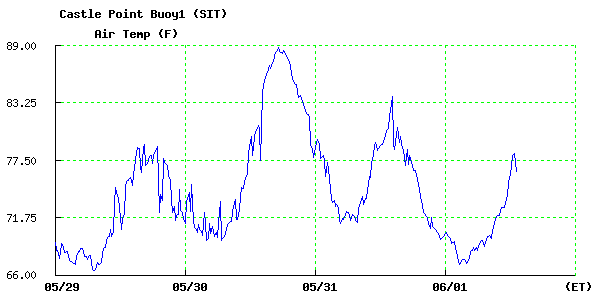
The cooling effect of winds that pass over the Hudson is strongest in the spring, sometimes too strong, due to the cool water temperatures.  You can actually get a good sense of the conditions at this particular park by checking out the NYHOPS Castle Point Buoy weather station, which is in the open water on the other side of the Hudson.  Right now, here are the temperature plots for Central Park (87 degrees) and the Buoy (77 degrees).

Air temperature: Central Park, on Belvedere Castle (Nat'l Weather Service), with the date of each new day shown at midnight

Air temperature on the Hudson, off Castle Point, Hoboken (Stevens Inst. Tech.)

The water temperature mainly governs the cooling effect, though if there is no wind, then there is no cooling effect.  The Hudson’s water temperature has been in the mid-to-upper 60’s for the past four days, also measured on the Castle Point Buoy (not shown).  The wind direction is also important — a south wind blows along the Hudson, so has a lot of time for cooling over the water, whereas a west wind blows across the Hudson, and does not.

You might wonder why Central Park temperatures were similarly hot each of the last three days, but high temperatures on the water (Castle Point buoy) have decreased each day — May 30th was actually hotter on the water.  This is because the winds were light and variable on the afternoon of the 30th, and there is very little loss of heat from the air to the water when the wind is weak.

Wind speed (y-axis) and direction at the Castle Point Buoy. The rotation of the arrow indicates the wind direction, with the arrow pointing up when the wind comes from the south. One knot is equivalent to 1.15 mph.

Today, the wind on this side of the river is gusting to about 15 or 20 miles per hour, plenty enough to cool the air, but also plenty enough to give me a headache … I guess I’ll head to the office!

Hopefully, the city can equip more of its parks with open wifi hotstpots, after years of talking about it.

Posted in weather | Tagged , , , , , , , , | 2 Comments

Rising Waters and Coastal Floods: Living with Sea Level Rise in NYC, Part 2/2

[This is the second of a pair of guest blog posts from Dr. Vivien Gornitz, a geologist and special research scientist with the NASA Goddard Institute for Space Studies and Columbia University Center for Climate Systems Research.  The first post gave some background on Earth’s climate history and sea level rise, and global climate change.  Vivien has a new book out on sea level rise.]

New York City’s vulnerability to coastal hazards

Thirteen percent of the world’s urban population lives within 10 meters (33 feet) of sea level[i].  As of 2005, about 40 million city dwellers worldwide were vulnerable to a 1-in-100 year coastal flood (one with a probability of exceeding a certain height once a century, or in other words, with a 1 percent chance of occurring in any given year)[ii].  In the United States (excluding the Great Lakes), 8.4 million people (or approximately 3 percent of the 2000 population) live within the 1-in-100 year flood zone[iii].

New York City and the surrounding metropolitan region, as well as many other coastal cities, face the prospect of accelerated sea level rise and increased coastal flooding.  With over 600 miles of densely populated shoreline, New York City ranks among the top ten port cities today in terms of population vulnerable to coastal flooding, and second only to Miami with assets exposed to coastal flooding[iv]. By the 2070s, New York City is projected to remain among the top ten coastal cities with assets at risk.

New York City already experiences a number of coastal hazards.  Sea level in the New York City metropolitan area has been rising between 2.2 and 3.8 cm (0.86-1.5 in) per decade for over a hundred years, as recorded on tide gauges.  This includes a contribution of 0.86-1.1 cm (0.34-0.43 in) per decade from regional subsidence, predominantly due to glacial isostatic effects[v].

Historically, most sandy beaches along the south shore of Long Island (including the Rockaways and Coney Island) and northern New Jersey have been eroding and have had to be periodically nourished by the U.S. Army Corps of Engineers by dredging sand from offshore and dumping it on the beaches.  While some New York City area salt marshes are thriving, recent studies show serious losses at Jamaica Bay and elsewhere within the last several decades[vi].  Although the exact causes have not yet been determined, it is believed that the marshes are victims of multiple stressors, including sea level rise, water pollution, dredging, and other human-caused disturbances.

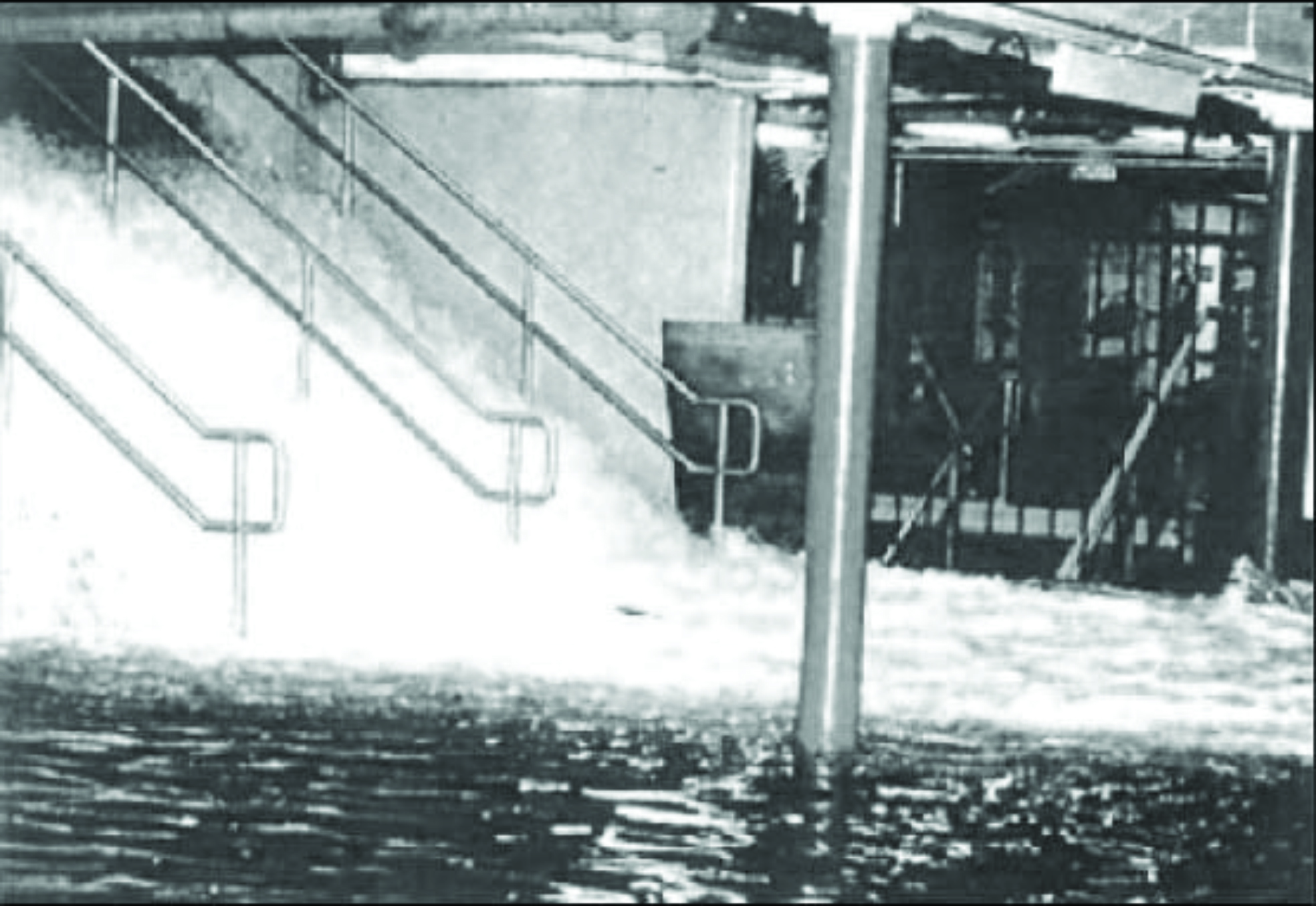
The city is no stranger to tropical cyclones, in spite of its northerly location.  A hurricane struck the city in 1821, producing a surge of 13 feet in 1 hour that flooded lower Manhattan as far north as Canal Street.  In 1893, another hurricane submerged southern Brooklyn and Queens, erasing a small barrier island off the Rockaways.  During the 20th century, the “Long Island Express” (1938), hurricane Donna (1960), and the weaker hurricane Gloria (1985) created extensive damage on nearby Long Island and in New Jersey.  Even extra-tropical winter storms, such as the nor’easter of December, 1992, can result in widespread flooding of low-elevation neighborhoods and seriously disrupt ground and air transportation (Fig. 3).

Fig. 3. Flooding of the Hoboken Path Station, New Jersey during the December, 1992 nor’easter. (New York City Office of Emergency Management).

Anticipating the future

In 2008, Mayor Michael Bloomberg convened the New York City Panel on Climate Change (NPCC), consisting of experts from the Goddard Institute for Space Sudies (GISS), Columbia University, other regional universities, and the private sector to advise the government of New York City on climate risks and on ways of adapting to climate change.  As part of the city’s development of comprehensive climate change adaptation policies, the NPCC provides information on future risks stemming from changes in temperature, precipitation, and sea level rise.

In the NPCC 2010 report[vii], future sea level rise was projected for New York City for a combination of 7 Global Circulation Models (GCMs) and 3 emissions scenarios (IPCC SRES A2, A1B, and B2).  One set of projections, based on IPCC methodology, include global contributions from thermal expansion and meltwater (glaciers, ice caps, and ice sheets).  Local effects include land subsidence (see above) and changes in water height due to local changes in ocean temperature, salinity, currents, and other factors.

Inasmuch as the IPCC may have underestimated the potential for accelerated ice sheet melting, an upper-bound “rapid ice melt” scenario, based on paleoclimate analogs, was created. Differing only in the meltwater term, it assumes that glaciers and ice sheets will melt at rates comparable to those following the last Ice Age, when sea level climbed rapidly over a ~10,000-12,000 year period at an average rate of 0.39-0.47 in/yr (10-12 mm/yr).  In this scenario, meltwater is assumed to rise exponentially from the present mean ice melt rate of 1.1 cm/decade between 2000 and 2004, reaching a meter by the end of the century.

The GCM-based projections show a sea level rise of 7 to 12 inches (18 to 30 cm) by the 2050s and 12 to 23 inches (30 to 58 cm) by the 2080s (Fig. 4). In the rapid ice-melt scenario, sea level jumps to ~41 to 55 inches (104 to 140 cm) by the 2080s.
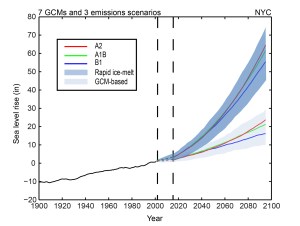
Figure 4. Observed (black line) and future sea level rise, New York City. The pale-shaded blue shows the full range of projected GCM-based sea level rise; the dark-shaded blue shows the full range of projected sea level rise for the rapid ice-melt scenario. The colored lines indicate averages for each of the emissions scenarios across the 7 GCMs. (CCSR, 2011).

The sea level rise is likely to increase the frequency, intensity and duration of coastal flooding.  IPCC-derived projections suggest that sea level rise alone will shrink the return period for the 1-in-100 year flood to once in 15 to 35 years by the 2080s. The return interval for the 1-in-10 year event is reduced to once in 1 to 3 years by the 2080s because of sea level rise[viii].

A higher average sea level would exacerbate city street, basement, and sewer flooding and create more frequent transportation disruptions (Fig. 5).  It would increase rates of beach erosion, necessitating additional beach nourishment programs.  Saltwater would encroach further on freshwater sources, potentially causing structural damage to infrastructure and affecting some Long Island aquifers.
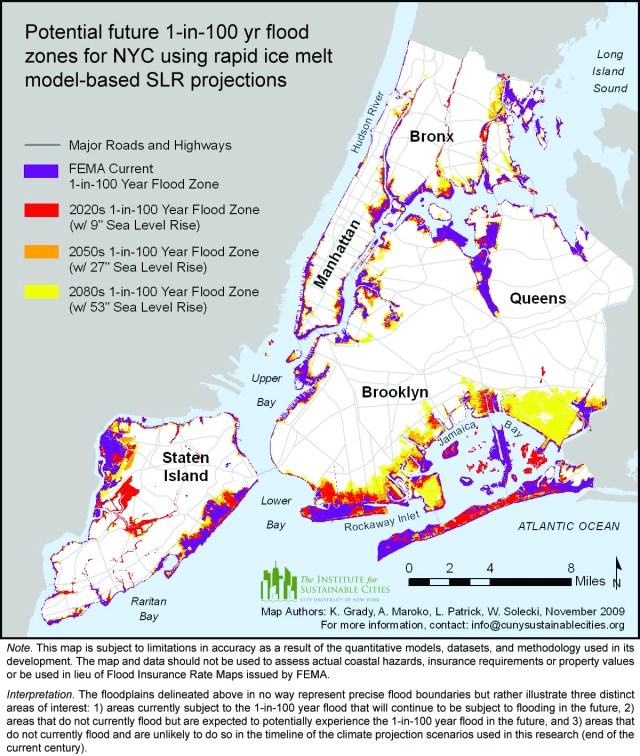
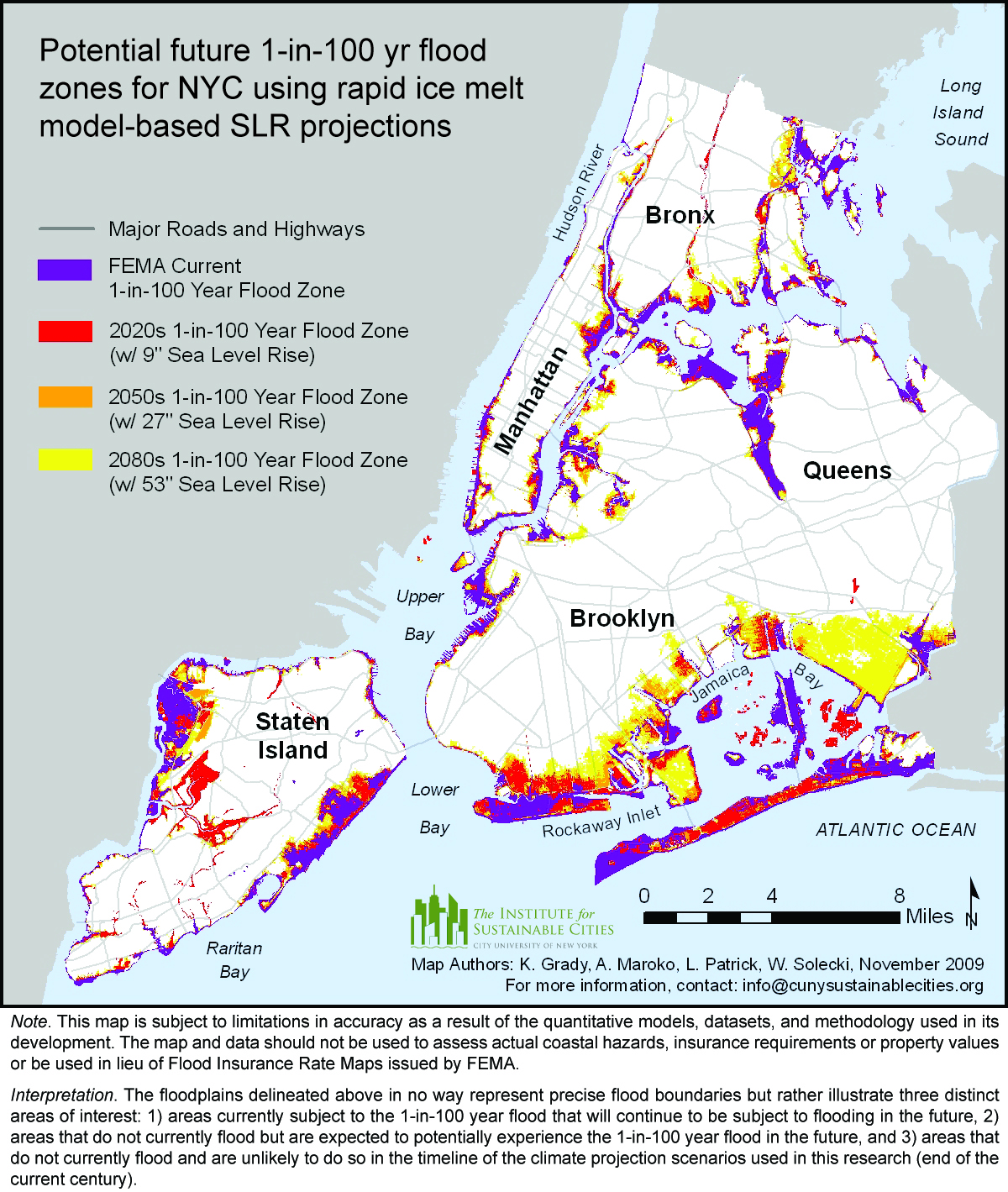
Figure 5. Areas flooded in New York City by the 1-in100-year flood with future sea level rise, assuming rapid ice melt. Current FEMA 1-in100-year flood zone (purple); with sea level rise by the 2020s (yellow); 2050s (orange); 2080s (red). (NPCC, 2010). 

Adapting to the rising waters

Given that temperature and sea level rise are already increasing, the NPCC recommended that New York City should begin adapting to climate change now.  Inasmuch as the extent of future sea level rise is uncertain, an effective response involves “flexible adaptation pathways” that can be updated regularly based on periodic monitoring and re-assessment of the latest climate change information[ix].  Other recommendations include preparing an inventory of infrastructure and assets at risk, linking adaptation strategies to capital and rehabilitation cycles, and developing a set of climate-resilient design and performance standards—tasks already begun by the New York City Climate Change Adaptation Task Force.  One of the most important recommendations, in terms of sea level rise and coastal flooding, is to update the current 1-in-100 year flood zone maps to incorporate data on future sea level rise (e.g., Fig. 5) [x].

An important goal of the recent New York City Comprehensive Waterfront Plan is to increase the city’s resilience to sea level rise[xi].  The Waterfront Plan endorses the iterative, risk-management approach outlined in the NPCC 2010 report.  It recommends adapting existing storm emergency preparations to respond to climate change.  Raising public awareness through education and community outreach is another means of building resilience.  It furthermore proposes a number of adaptive approaches, for example upgrading climate risk data bases (including LIDAR mapping), assessing critical infrastructure vulnerabilities, flood-proofing buildings in vulnerable zones, and implementing protective strategies (such as building seawalls, bulkheads, or breakwaters).  “Soft” measures include restoring wetlands and beaches, raising dunes, or adding fill to elevate buildings.

Although originally developed for New York City, the NPCC approach is sufficiently general, so it can be adapted to the needs of other coastal metropolitan areas in the U.S. and abroad.  Many of the world’s largest cities are located along the coast, often on low-lying, subsiding deltas.  These cities include (other than New York City)  Dhaka, Mumbai, Calcutta, Shanghai, Guangzhou, Hong Kong, Ho Chi Minh City (Saigon), Bangkok, Tokyo, Manila, Sydney, Lagos, Dakas, Alexandria, London, Rotterdam, Hamburg, Miami, New Orleans, Los Angeles, San Francisco, Seattle, and Vancouver.  To varying degrees, these cities can expect to encounter increased land submergence and flooding from coastal storm surges and heavy rainfall, in addition to other climate-related hazards, as summarized in the First Assessment Report on Climate Change and Cities (ARC3)[xii].  New York City’s preparatory steps outlined in the NPCC 2010 report provide an important model for helping other cities mitigate and adapt to climate change.

Disclaimer: The opinions expressed in this article are those of the author and do not represent the official views of Columbia University CCSR, NASA Goddard Institute for Space Studies, or the sponsoring agencies.


[i] McGranahan, G., Balk, D., and Anderson, B. The Rising Tide: Assessing the Risks of Climate Change and Human Settlements in Low Elevation Coastal Zones. Environment & Urbanization 19, no 1 (2007):17-37.

[ii] Nicholls, R.J., Hanson, S., Herweijer, C., Patmore, N., Hallegatte, S., Corfee-Morlot,J., Ch>teau, and Muir-Wood, R. Ranking Port Cities with High Exposure and Vulnerability to Climate Extremes: Exposure Estimates. Organisation for Economic Co-operation and Development OECD Environment Working Papers No. 1, OECD ENV/WKP(2007)1. (2008).

[iii] Crowell, M., Coulton, K., Johnson, C., Westcott, J., Bellomo, D., Edelman, S., and Hirsch, E. An Estimate of the U.S. Population Living in 100-Year Coastal Flood Hazard Areas. Journal of Coastal Research 26, no. 2 (2010): 201-211.

[iv] Nicholls et al. (2008).

[v]i.e., collapse of the peripheral bulge south of the edge of the ice sheet, following retreat of the ice. See also  http://www.psmsl.org/train_and_info/geo_signals/gia/peltier/index.php

[vi] Hartig, E.K., Gornitz, V., Kolker, A., Mushacke, F. And Fallon, D., 2002. Anthropogenic and climate-change impacts on salt marsh morphology in Jamaica Bay, New York City. Wetlands, 22, 71-89.  Hartig, E.K. and Gornitz, V., 2005. Salt Marsh Change, 1926-2003 at Marshlands Conservancy, New York. Long Island Sound Research Conference Proceedings.

[vii]Rosenzweig, C. and Solecki, W., eds., 2010. Climate Change Adaptation in New York City: Building a Risk Management Response. New York City Panel on Climate Change 2010 Report. Annals of the New York Academy of Sciences, v. 1196, 354pp. http://www.nyas.org.

[viii] Extreme flood records from the Battery tide gauge were used to calculate the 1-in-10 year events.  Because hourly data are unavailable prior to 1960, the 100-year flood return curve (or “stage-frequency relationship”) for New York City was obtained from a U.S. Army Corps of Engineers hydrodynamic model that includes both surge and tidal components (see Gornitz, V., Couch, S., and Hartig, E.K., Impacts of sea level rise in the New York City metropolitan area. Glob. and Planet. Change, 32 2002, 61-88).

[ix] Rosenzweig, C. and Solecki, W.D. eds., 2010 (see above); Rosenzweig, C. and Solecki, W.D. and 15 others, 2011. Developing coastal adaptation to climate change in the New York City infrastructure-shed: process, approach, tools, and strategies. Climatic Change 106, 93-127.

[x] The NPCC prepared three guidebooks that describe different components of the process.  These include:

Horton, R., and Rosenzweig, C.,  2010: Climate Risk Information, New York City Panel on Climate Change. Ann. New York Acad. Sci., 1196, 147-228, doi:10.1111/j.1749-6632.2010.05323.x.

Major, D.C., and M. O’Grady, 2010: Adaptation Assessment Guidebook, New York City Panel on Climate Change. Ann. New York Acad. Sci., 1196, 229-292, doi:10.1111/j.1749-6632.2010.05324.x.

Solecki, W., Patrick, L., and Brady, M,  2010: Climate Protection Levels, New York City Panel on Climate Change. Ann. New York Acad. Sci., 1196, 293-352, doi:10.1111/j.1749-6632.2010.05325.x.

[xi] New York City Department of City Planning, March 2011. Vision 2020: New York City Comprehensive Waterfront Plan.

[xii] Rosenzweig, C., Solecki, W.D., Hammer, S.A., and Mehrotra, S., eds. 2011. Climate Change and Cities: First Assessment Report of the Urban Climate Change Research Network.

Posted in climate, water | Tagged , , , , , , , , , , , , , , , , , , | 1 Comment

Fleet Week’s Parade of Ships on the Hudson

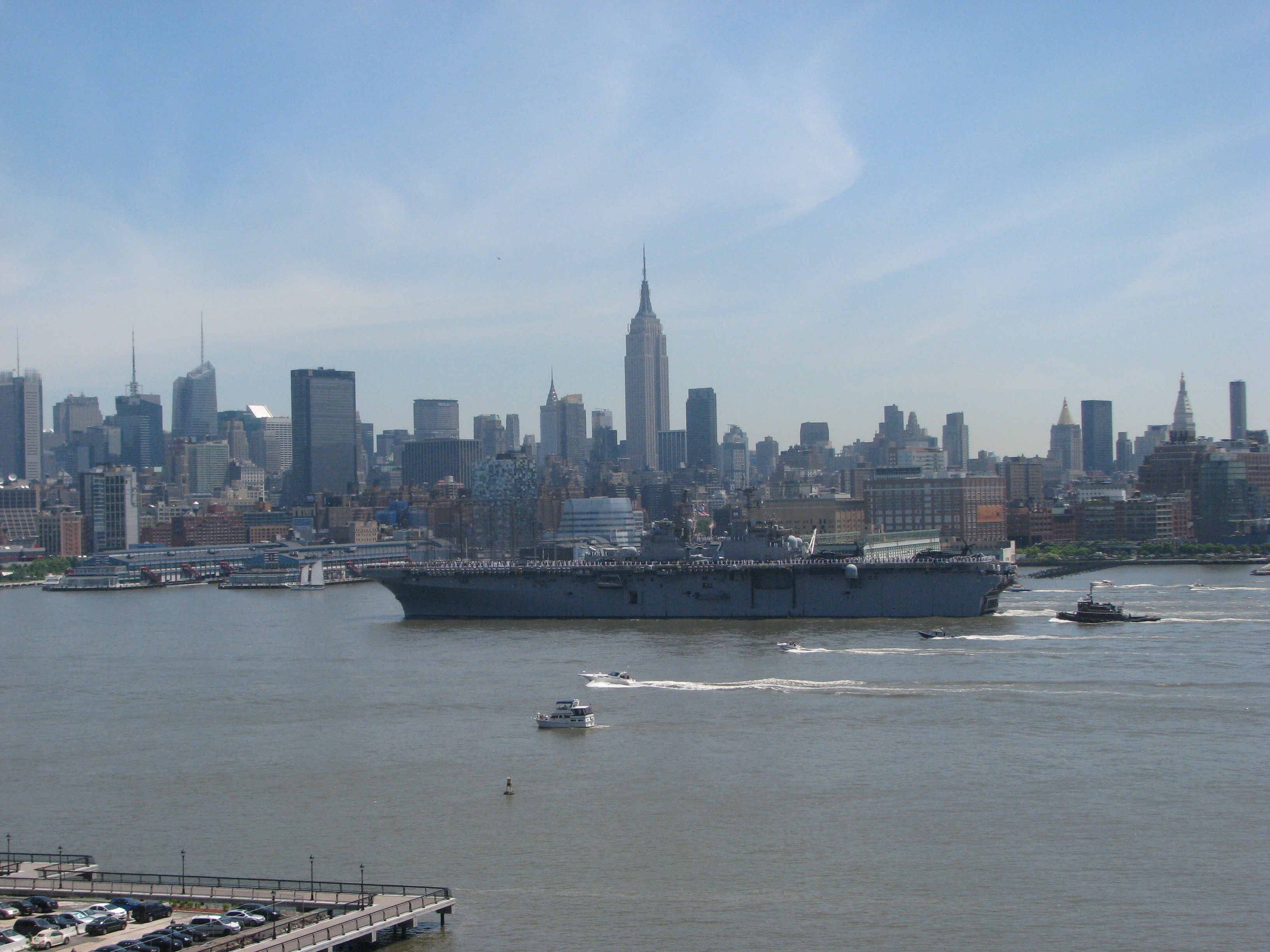
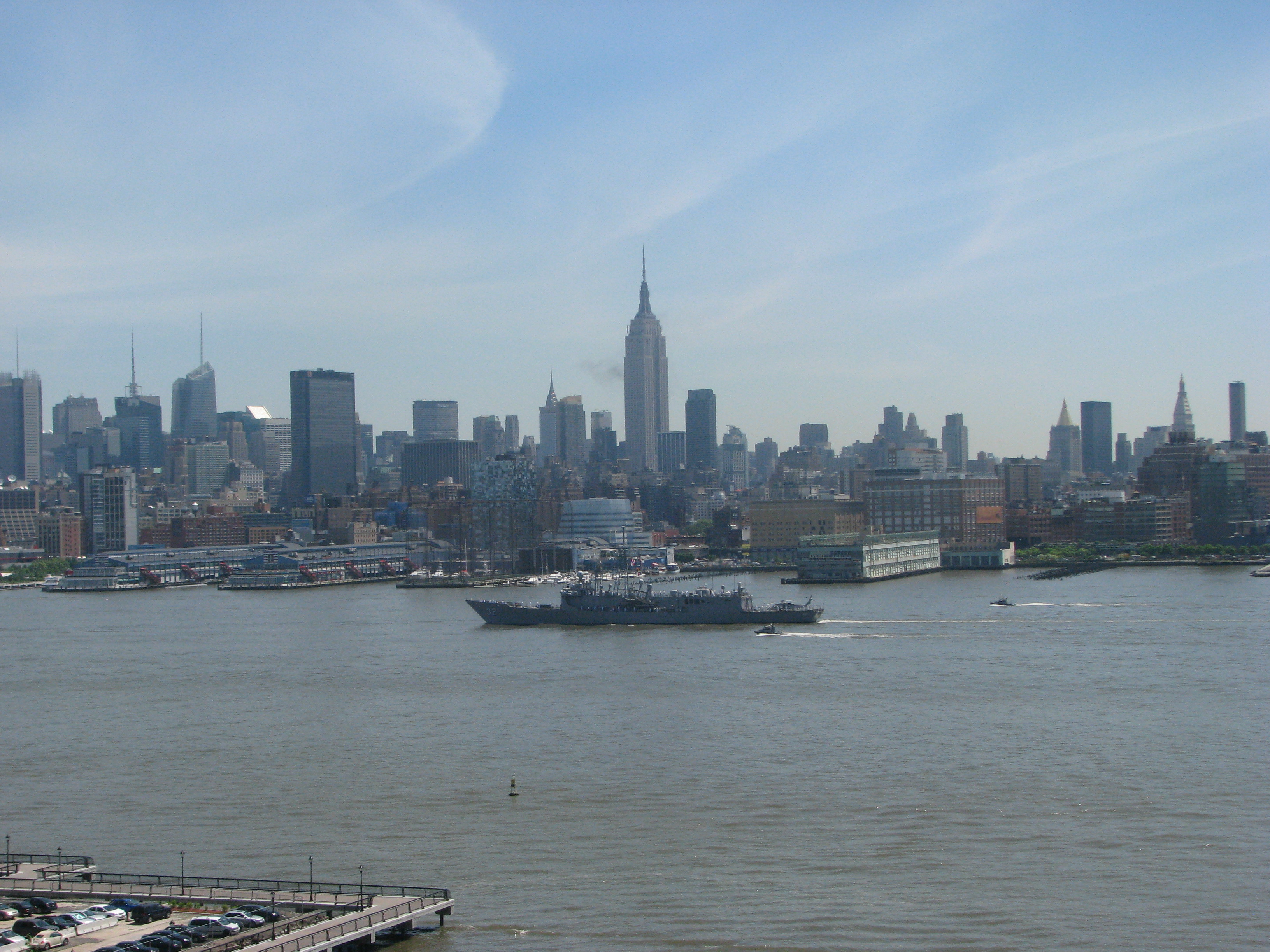
This week is Fleet Week in New York City, and my colleague Alex Sedunov captured hundreds of photos of the march of military vessels up the Hudson yesterday. The weather was crisp, warm and clear, making for a wonderful welcome and a truly great set of shots.

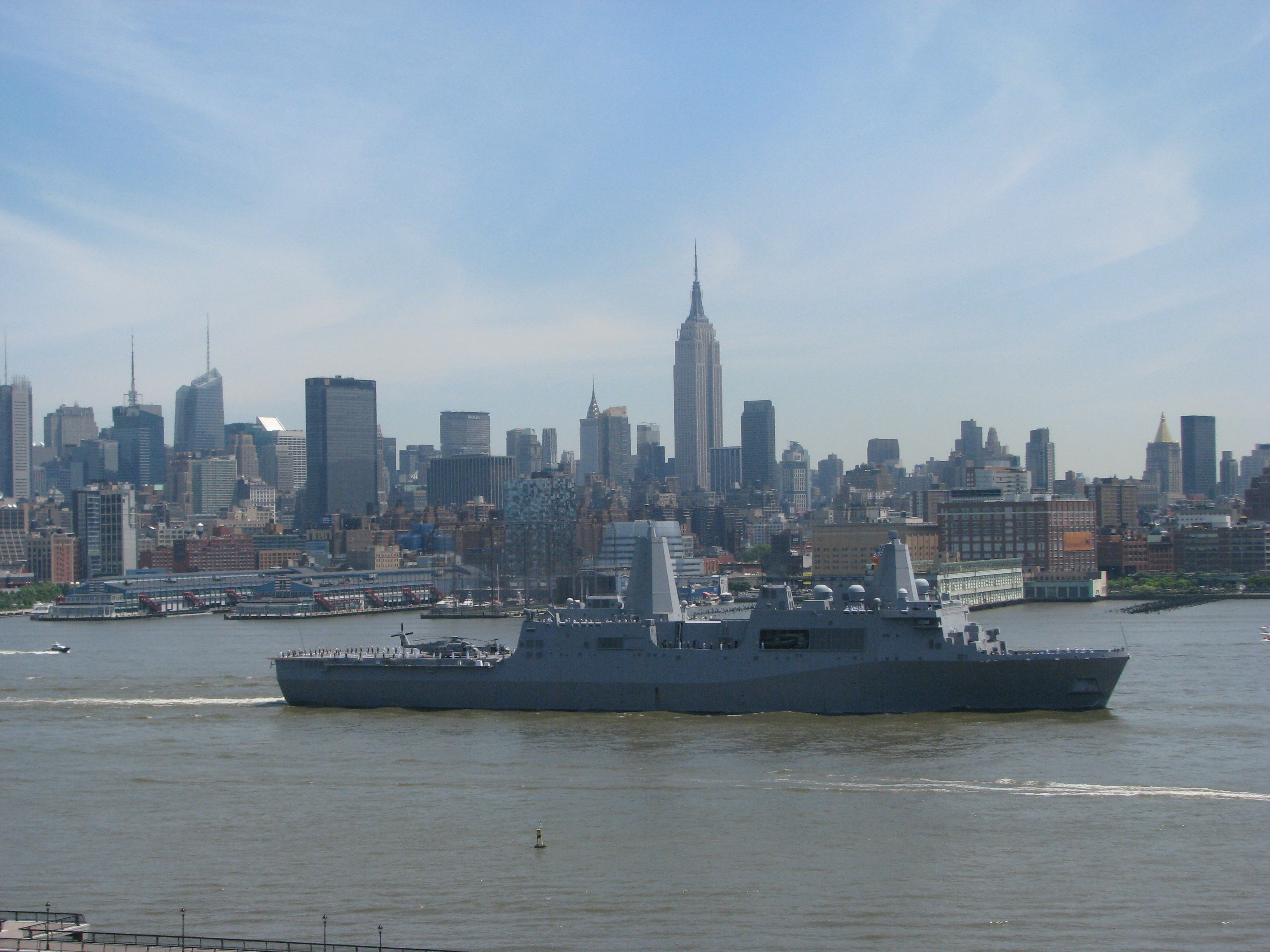
This first shot is of the USS New York, which was built incorporating steel that was salvaged from the World Trade Center, after it was destroyed in the September 11 attacks.  It is docked at Staten Island.

Here’s the USS Iwo Jima which is docked by Manhattan:


And there were a lot of aerial sights to see also, with military helicopters and show planes:

And if you don’t mind some dizzying moments when the camera was moved for different views, here is a complete time-lapse of the afternoon’s ships, also from Alex Sedunov:
https://video.google.com/get_player?ps=docs&partnerid=30&docid=0B_d704y7Nn7LMzY1M2NhMWEtNTk0NS00ZmMxLThkNzUtYjhmZmJiODZiOTZl&BASE_URL=https://docs.google.com/&authkey=CI20itgB&hl=en_US

Posted in photography | Tagged , , , , | 2 Comments

Rising Waters and Coastal Floods: Living with Sea Level Rise in NYC, Part 1/2

[This is the first of a pair of guest blog posts from Dr. Vivien Gornitz, a geologist and special research scientist with the NASA Goddard Institute for Space Studies and Columbia University Center for Climate Systems Research.  The first post gives some background on Earth’s climate history and sea level rise, and global climate change.  In the second post, Vivien will discuss New York City’s vulnerability to sea level rise, as well as planned responses.  Vivien has a new book out on sea level rise.]

Clues to the future from the past

Past climates and sea levels have differed vastly from today.  Fifty million years ago, ferns, cycads, and sub-tropical vegetation grew near the poles and crocodilian reptiles stalked the Arctic. Sea level was much higher.  As the Earth slowly cooled, by 34 million years ago, appreciable ice began to accumulate on Antarctica and sea level gradually lowered.  During the mid-Pliocene, ~3 million years ago—the last period with warmth comparable to that expected by 2100, less ice covered Antarctica and the Northern Hemisphere remained largely ice-free.  Global temperatures averaged 2 °C to 3 °C above present (3.6 °to5.4 °F), carbon dioxide levels were similar, but sea level soared  by 25 to 30 meters (82-98 feet)[i] (Table 1).  After 2.7 million years ago, large ice sheets began to accumulate on the Northern Hemisphere.

Table 1: Comparison of past, present, and future warm climates.

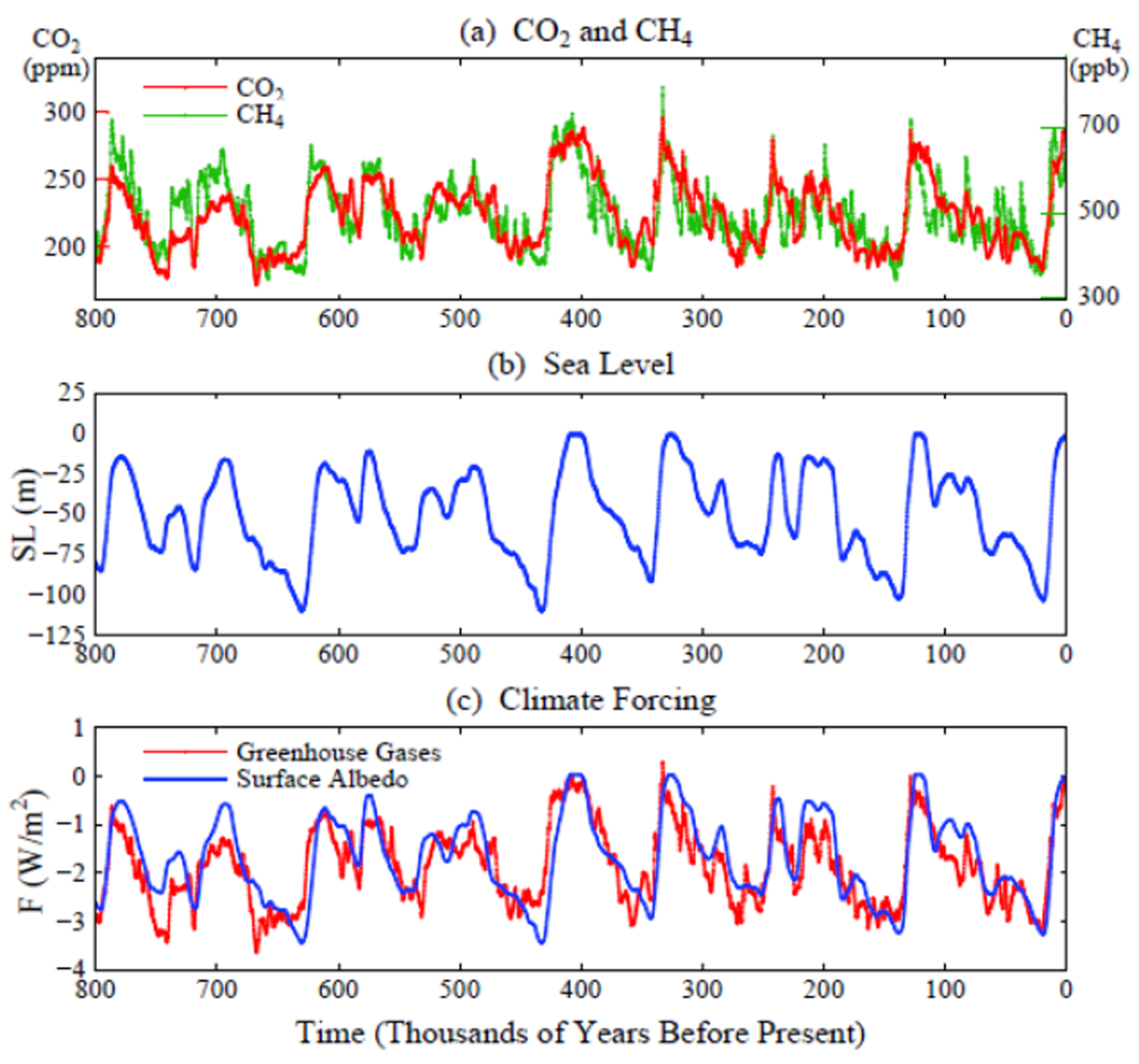
Within the last 800,000 years, ice sheets successively spread outward and then slowly released their frigid grip across polar landscapes.  Temperature and sea level varied more or less in sync with atmospheric carbon dioxide and methane[ii], as measured by oxygen isotope ratios in foraminifera (one-celled marine organisms) sensitive to ocean temperature and sea level, and trace gases trapped in tiny air bubbles in Antarctic ice (Fig. 1).  During the Last Interglacial, ~125,000 years ago, when carbon dioxide stood at pre-industrial levels (~280-300 ppm vs 390 ppm today), polar summers were 3 ° to 5 °C (5.4 ° to 9 °F) warmer and sea levels 4 to 6 meters (13.1-19.7 feet) higher (perhaps even as much as 6.6 to 9.4 m)[iii].  The balmier climate was a consequence of longer-lasting and stronger sunlight during a favorable configuration of the Milankovitch astronomical cycle, when a higher tilt angle of the Earth’s axis coincided with perihelion (closest approach to the Sun) at Northern Hemisphere summer solstice (June 21).  The climate effects were probably amplified by feedbacks such as increasing levels of carbon dioxide and methane, as the ice melted.

Figure 1. Variations in carbon dioxide, methane, sea level, and climate forcing over the glacial-interglacial cycles of the last 800,000 years (from Hansen, J.E. and Sato, M., 2011. Paleoclimate implications for human-made climate change. Used with permission). http://www.columbia.edu/~jeh1/mailings/2011/20110118_MilankovicPaper.pdf

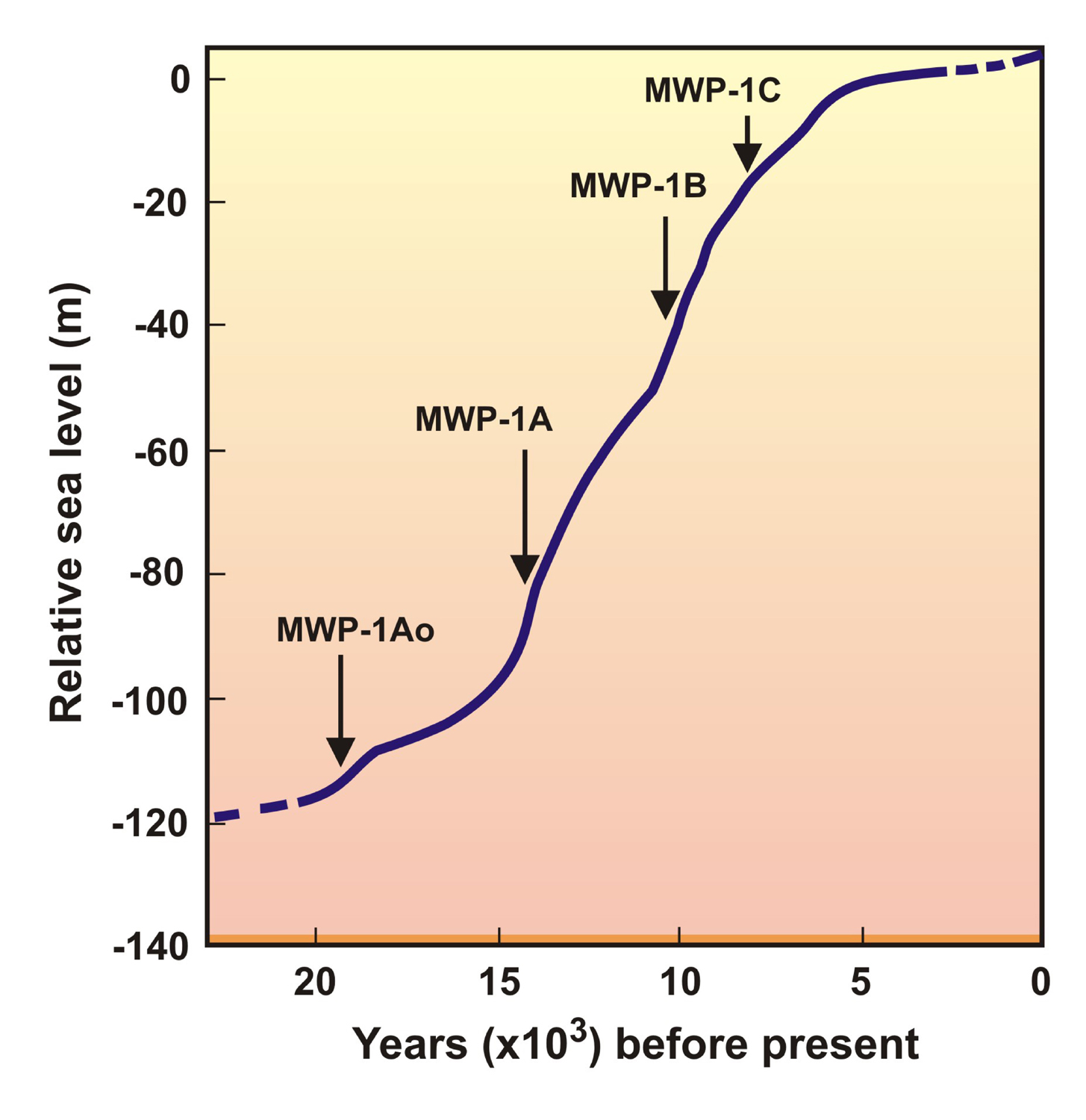
At the end of the last Ice Age, starting roughly 20,000 years ago, sea level began to rise gradually at first, accelerated to 40 to 60 mm/yr during several “meltwater pulses”, finally climbing 120 meters (394 feet) from its Ice Age minimum (Fig. 2).  By 7,000 years ago, the ocean closely approached its present height[iv].

Figure 2. Generalized post-glacial sea level rise curve. Periods of rapid sea level rise (meltwater pulses, MWP) are indicated. (Gornitz, 2009).

Current trends

Our planet is now heating up, largely because of the increasing anthropogenic (human-caused) greenhouse gases in the atmosphere from fossil fuel combustion and deforestation.  Atmospheric levels of carbon dioxide and methane are now the highest in 800,000 years[v].  Mean global temperature has increased by 0.7 °C (1.3 °F) during the 20th century[vi].  Current temperatures likely surpass those of the past 1,000 years[vii].  The last decade has been the warmest in the instrumental period[viii].  Sea level gauges register a 1.7 to 1.8 mm/yr rise in twentieth century global sea level.  Satellites detect an even higher trend of ~3 mm/yr since 1993[ix].  The 20th century sea level trend exceeds that of the last few millennia by 1 to 2 mm/yr[x].

On a centennial timescale, the two dominant processes that alter ocean height include thermal expansion of warming sea water and addition of meltwater from receding mountain glaciers and ice sheets.  But sea level rise will not be globally uniform[xi].  Local to regional processes include land motions due to glacial isostatic adjustments[xii], recent geological activity, and land subsidence produced by subsurface groundwater, oil, or gas withdrawal.  In addition, as the gravitational pull of a shrinking ice sheet weakens, nearby sea level drops, in spite of the added meltwater.  Farther from the ice mass, the ocean rises. Ocean currents may also shift as climate changes.

Future temperature and sea level rise        

As carbon dioxide levels continue to rise, late 21st century temperatures are projected to resemble those of the Last Interglacial and the mid-Pliocene periods, when sea levels stood many meters higher.   Although the Intergovernmental Panel on Climate Change (IPCC) Fourth Assessment Report foresees a sea level rise of 18 to 59 cm (7.1-23 in) by the 2090s, observed values already approach the upper end of climate model projections for this decade[xiii].  Semi-empirical calculations correlating historic sea level trends and temperature imply a rise of up to 1.4-1.9 m by century’s end[xiv].

Could sea level rise even higher? 

Although the rate of ice melt is increasing, glaciers and ice sheets probably will not discharge enough ice to raise sea level by more than 1 to 2 meters by 2100.  A plausible upper bound lies near one meter, based on an average rate of ~10 mm/yr during the most recent deglaciation.

How much longer will sea level continue to rise?

Because of the ocean’s high thermal inertia, surface heat slowly penetrates to the seafloor, “committing” us to additional sea level rise for centuries.  Furthermore, carbon dioxide already in the atmosphere dissipates gradually over hundreds to thousands of years after additions of anthropogenic greenhouse gases stop.  Elevated temperatures are likely to persist long enough for significant ice sheet melting, raising sea level even further.

Responding to changing climate

In spite of accumulating scientific evidence in support of global warming, much popular skepticism remains.  In most places (other than polar regions, mountain tops, low-lying deltas, or barrier islands), the observed changes are still fairly subtle, often overshadowed by wide day-to-day, month-to-month, and year-to-year variations in temperature, rainfall, snowfall, blizzards, and extreme weather events.  We have not yet begun to experience the full range of climate change and sea level rise impacts.  Prevention of a watery future ultimately involves curtailing our carbon emissions.  In the interim, we can begin to adapt to the rising sea.

[This guest blog post will continue in Part 2/2, where Vivien discusses New York City’s vulnerability to sea level rise, as well as planned responses.  Disclaimer: The opinions expressed in this article are those of the author and do not represent the official views of Columbia University CCSR, NASA Goddard Institute for Space Studies, or the sponsoring agencies.]

REFERENCES

[i] IPCC, 2007. Climate Change 2007: The Physical Science Basis. Contribution of Working Group I to the Fourth Assessment Report of the Intergovernmental Panel on Climate Change. Solomon, S., Qin, D., Manning, M., Chen, Z., Marquis, M., Averyt, K.B., Tignor, M., and Miller, H.L., eds. Cambridge, UK: Cambridge University Press; Dwyer, G.S. and Chandler, M.A., 2009.  Mid-Pliocene sea level and continental ice volume based on coupled benthic Mg/Ca palaeotemperatures and oxygen isotopes.  Phil. Trans. Soc. A. 367, 157-168.

[ii] Brook, E. Windows on the Greenhouse. Nature 453 (2008): 291-292. Rohling, E.J., Grant, K., Bolshaw, M., Roberts, A.P., Siddall, M., Hemleben, Ch., and Kucera, M. Antarctic Temperature and Global Sea Level Closely Coupled Over the Past Five Glacial Cycles. Nature Geoscience 2 (2009): 500-504.

[iii] IPCC (2007); Kopp, R.E. et al., 2009. Probabilistic assessment of sea level during the last interglacial stage. Nature 462, 863-867.

[iv] Peltier, W.R. and Fairbanks, R.G. Global Glacial Ice Volume and Last Glacial Maximum Duration from an Extended Barbados Sea Level Record. Quaternary Science Reviews, 25 (2006): 3322-3337. Gornitz, V., 2009.  Sea Level Change, Post-Glacial. In: Gornitz, V., ed. Encyclopedia of Paleoclimatology & Ancient Environments. Dordrecht, the Netherlands: Springer.

[v] Brook, E. (2008).

[vi] IPCC (2007).

[vii] Jones, P. D., and Mann, M.E. Climate Over the Past Millennia. Reviews of Geophysics 42 (2004): RG2002/2004, 42p.  Mann, M. E., Bradley, R.S., and Hughes, M.K. Global-Scale Temperature Patterns and Climate Forcing Over the Past Six Centuries. Nature 392 (1998): 779-787.  Osborn, T.J. and Briffa, K.R. The Spatial Extent of 20th Century Warmth in the Context of the Last 1200 Years.  Science 311 (2006): 841-844.

[ix] IPCC (2007).

[x] Donnelly, J.P., Cleary, P., Newby, P., and Ettinger, R. Coupling instrumental and geological records of sea-level change: Evidence from southern New England of an increase in the rate of sea-level rise in the late 19th century. Geophysical Research Letters 31 (2004): L05203, doi:10.1029/2003GL018933.

Gehrels, R.W., Kirby, J.R., Prokoph, A., Newnham, R.M., Achertberg, E.P., Evans, H., Black, S., and Scott, D.B. Onset of recent rapid sea-level rise in the western Atlantic Ocean. Quaternary Science Reviews 24 (2005): 2083-2100.  Gehrels, W.R., Hayward, B.W., Newnham, R.M., and Southall, K.E. A 20th Century Acceleration of Sea-Level Rise in New Zealand. Geophysical Research Letters (2008): 35 L02717, doi:10.1029/2007GL032632, 5p.

[xi] e.g., see Church, J.A., Woodworth, P.L., Aarup, T., and Wilson, W.S. 2010. Understanding Sea-Level Rise andVariability. Oxford, UK:  Wiley-Blackwell.

[xii] Adjustments of the earth’s crust to loading and unloading of ice masses.

[xiii] Rahmstorf, S., Cazenave, A., Church, J.A., Hansen, J.E., Keeling, R.F., Parker, D.E., and Somerville, R.C.J. Recent Climate Observations Compared to Projections.  Science 316 (2007): 709.

[xiv] Rahmstorf, S., Cazenave, A., Church, J.A., Hansen, J.E., Keeling, R.F., Parker, D.E., and Somerville, R.C.J. Recent Climate Observations Compared to Projections.  Science 316 (2007): 709.  Vermeer, M. and Rahmstorf, S., 2009. Sea Level Linked to Global Temperature. Proc. Natl. Acad. Sci. 106 (51), 21,527-21,532.  Horton,R., Herweijer, C., Rosenzweig, C., Liu, J., Gornitz, V. and Ruane, A.C. Sea Level Rise Projections for Current Generations CGCMs based on the Semi-Empirical Method. Geophysical Research Letters 35 (2008): L02715, doi:10.1029/2007GL032486.

Posted in climate, water | Tagged , , , , , , , , , , , | Comments Off on Rising Waters and Coastal Floods: Living with Sea Level Rise in NYC, Part 1/2

Jamaica Bay: Pollution, Flooding and Human Vulnerability

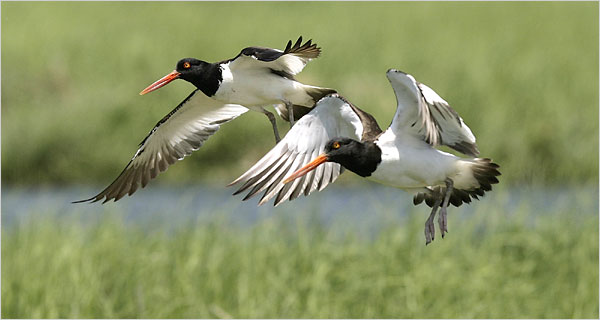
American oystercatchers over the dwindling marsh grasses of Jamaica Bay. Credit: Kathy Willens, AP.

Jamaica Bay is often referred to as New York City’s “ecological crown jewel”, and it is indeed a spectacular location to view migrating birds or catch large sport fish like striped bass, among other positives.  However, the bay has some serious problems for which no solution is in sight – pollution, erosion, and storm surges, the latter of which also seriously threatens the safety of people in surrounding neighborhoods.

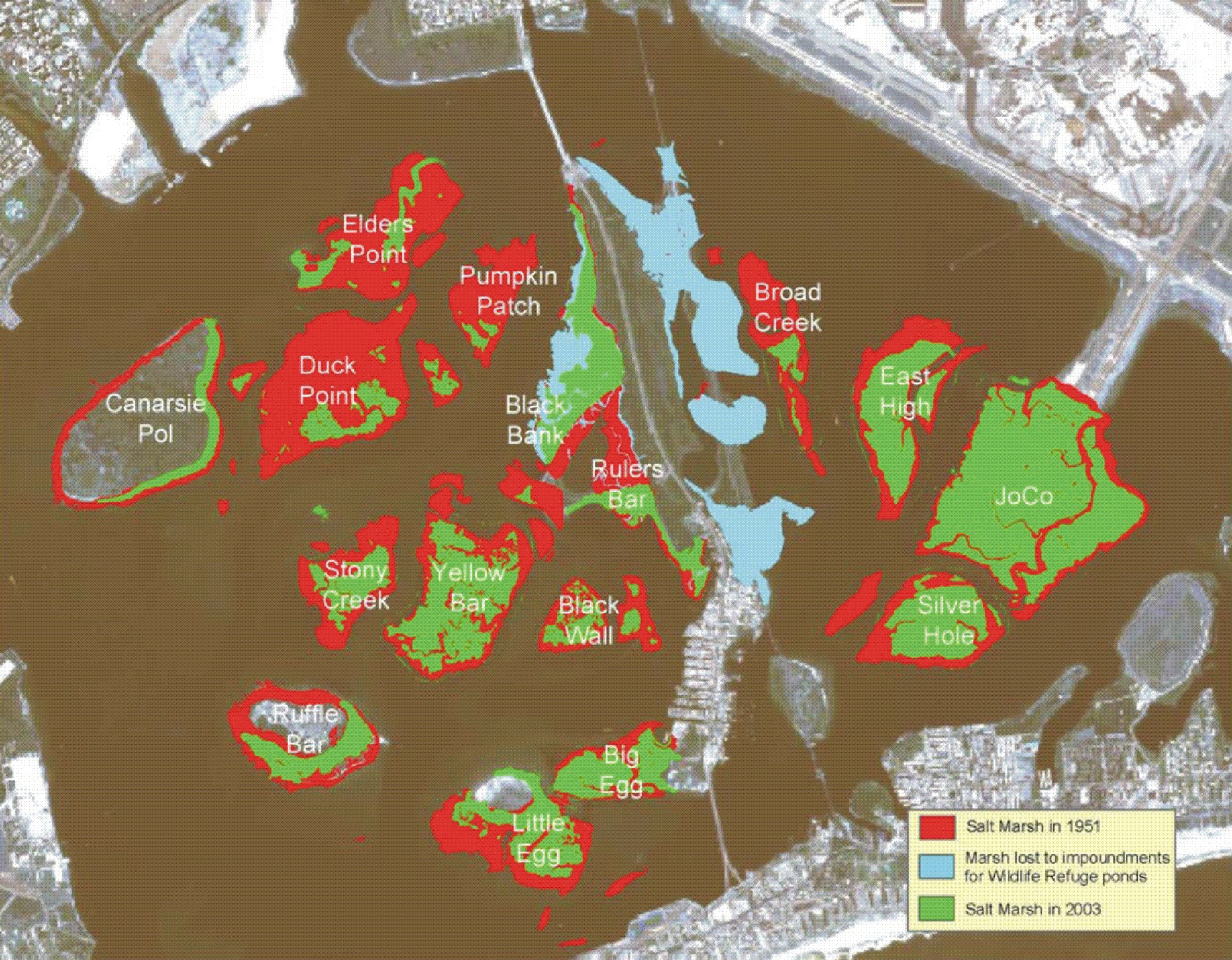
One issue affecting the bay and its human neighbors is the loss of marshes and the erosion of their islands in the middle of the bay.  The entrance channel was dramatically deepened, the volume of the bay has increased by 350%, and every year the system becomes more like an oceanic bathtub than the system of interconnected islands and brackish tidal marshes that once existed.  Sea level rise threatens to worsen matters, and the news has only gotten worse in recent years – rapid glacier melt at locations like Greenland may increase the rates of sea level rise beyond what was recently expected.  But at this point, scientists have multiple competing theories for the past erosion, and there is no plan for dealing with sea level rise.

Red and blue regions mark salt marsh losses since 1951, and green areas show marsh area in 2003. Source: http://nbii-nin.ciesin.columbia.edu/jamaicabay/jbwppac/JBAC_NPS_SaltMarshReport_080207.pdf.

The marsh loss is not only an ecological problem, but a human vulnerability problem. Hundreds of thousands of Queens and Brooklyn residents in the watershed live on land within range of a realistic 10-13 foot hurricane storm surge.  Moreover, a reasonably likely sea level rise of 3-4 feet this century would mean that a bad nor’easter will lead to flooding levels as bad as one of the historic hurricanes we’ve been fortunate to elude for the past century – the worst nor’easters (e.g. 1992) have an annual probability of occurrence of roughly one in ten and cause surges of about 7 feet, so adding 3-4 feet “puts them over the top” and can lead to overtopping of Rockaway and Coney Islands, as well as extensive inland flooding.

Before we modified it, Jamaica Bay had a much shallower entrance channel and plentiful marshes, both of which likely protected inland areas by attenuating storm surges – the system used to attenuate tides, whereas now tide heights increase as tides flow from the entrance to the inner reaches of the bay (see this point made in a published paper).  Tides and storm surges have many similarities, so if tides are amplified as they move into the bay, a hurricane storm surge will likely also grow in size.

In my current research on storm surges using the Stevens Institute sECOM ocean model that underlies the Storm Surge Warning System, I hope to quantify this flooding vulnerability, how it has changed with past modifications of Jamaica Bay, and how vulnerability could be reduced in the future.

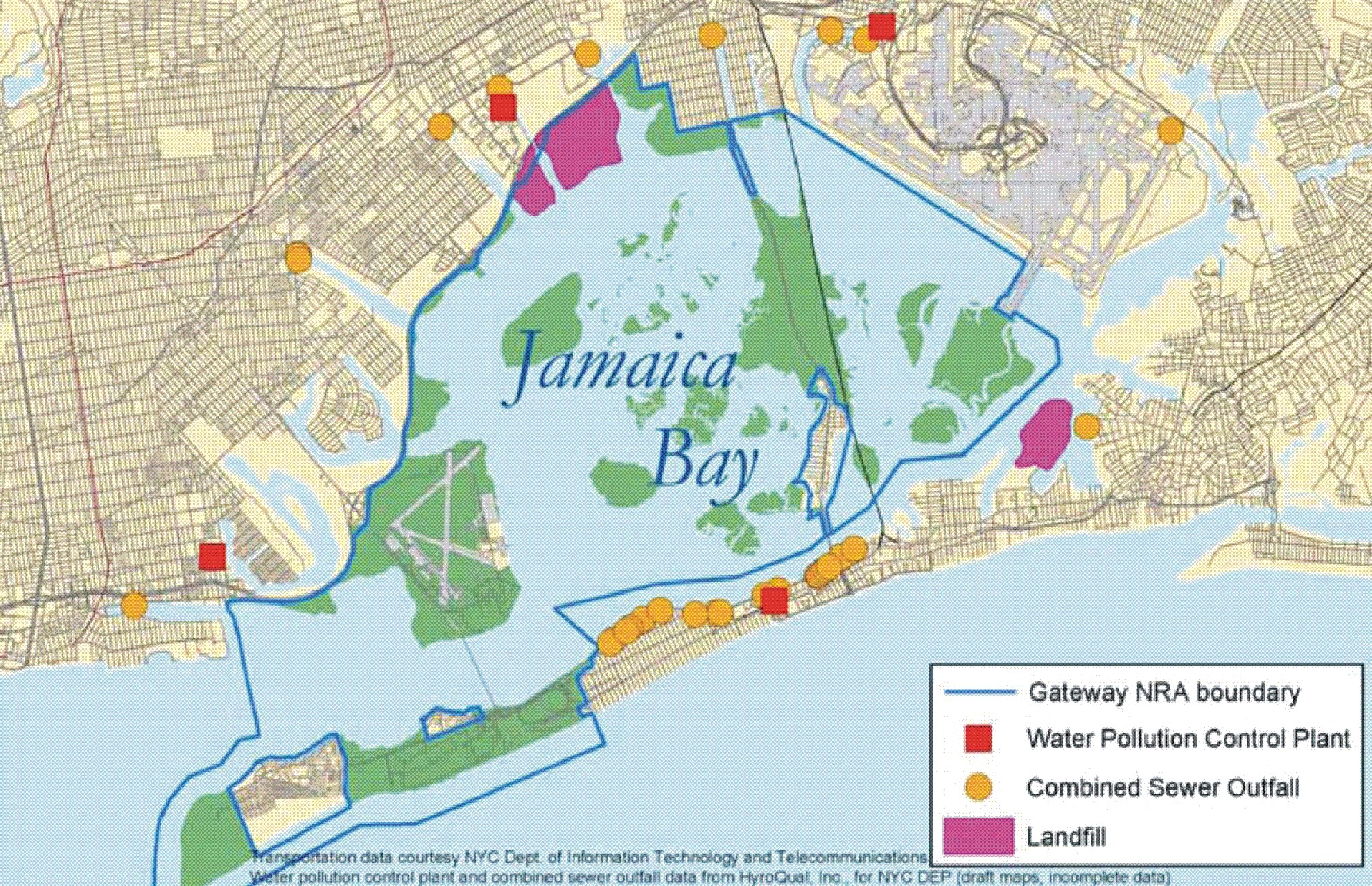
Another problem with Jamaica Bay and surrounding communities is that raw sewage spills occur several dozen times per year when it rains over the bay’s watershed.  These occur when rainfall rates are fast enough to overflow the sewage treatment plant reservoirs, and force “combined sewage overflows” – releases of the mixed rainwater and sewage to Jamaica Bay through sewer pipes.

Even when the system completes the sewage treatment process, the result is 300 million gallons of sewage effluent discharge per day that is high in nutrients and causes low oxygen dead-zones in the bay.  These dead zones have been known to cause large fish die-offs that can clog and stink up the dead-end canals that run up into some neighborhoods.  The good news is that NYC has committed to reducing nutrient discharges in the effluent by 50% over ten years.  Unfortunately, temporary sewage storage tanks or treatment facilities that move effluent offshore to the open ocean can cost billions of dollars, so this is a very expensive problem to solve.

Posted in opinion, water | Tagged , , , , , , , , , , , , , , | 3 Comments

Rain-Wind-Tide Flooding Trifecta

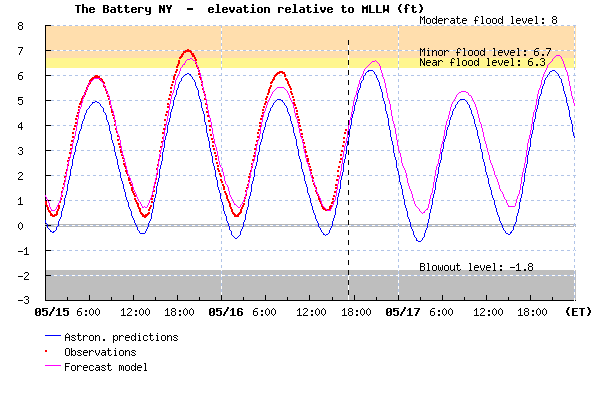
Though it will in no way compare to the ongoing flooding problems in other regions of our continent, we’ll likely be hearing about our own sogginess at some flood-prone parts of the region from now through Thursday.  Any flooding that occurs tonight will be a result of the merging of spring high tides with a minor storm surge blown in by moderately strong east winds.  Unfortunately, mother nature will throw one more factor into the mess tomorrow, with two days of potentially heavy rainfall that could bring even more flooding.

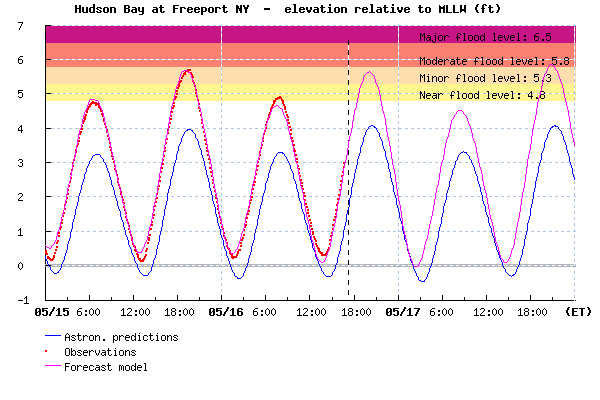
Below are astronomical tide predictions (blue) and total water level predictions (pink) relative to normal low tides (MLLW), from the Storm Surge Warning System (SSWS) for the water levels for today as well as the next two days.  This evening’s spring high tide may be pushed high enough by winds for some minor flooding at coastal locations (all the places around NYC where there is seawater are “coastal”, including the Hudson).  Tomorrow evening is spring tide, plus the winds are projected to be stronger, so it should be worse.  Check the SSWS website out near high tide this evening or Tuesday evening or Wednesday evening, to see if any orange and red lights pop up to mark flooding water levels.

Using computer models to predict flooding can get boring, so I am planning to visit The Battery at 8pm (high tide) to see for myself what the “minor flooding level” means on the ground beneath my own feet.  The last time there was minor coastal flooding, I got rain-drenched but managed to observe that water levels were about a 1.5 feet away from flooding over the seawall onto East River Drive (FDR) at 96th Street.  It’s pretty alarming to see the ocean rise up to within a foot of flooding over the wall and into our city, and I recommend checking it out before the rains set in tomorrow.

One of the worst areas in the region for flooding when there are east or northeast winds is Freeport, Nassau County, presumably due to the fact that waters get blown there from the western end of South Oyster Bay (correct me if you know better) and through the nearby channel out to the Atlantic.  Here’s the SSWS forecast for that location.

Posted in water, weather | Tagged , , , , , , , , | Comments Off on Rain-Wind-Tide Flooding Trifecta

Blanket of Fog Rolls out over NYC

tweeted by @isardasorenson

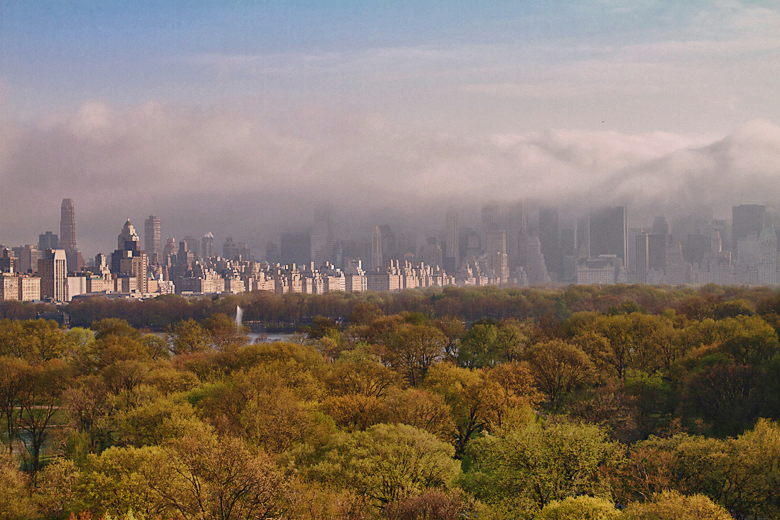
View of the fog rolling in, from Central Park, credit: Inga Sarda-Sorensen, @isardasorensen

A cold, damp blanket of fog snuffed out our heavenly 70+ degree afternoon today in New York City, to the thrill of some and disgust of others, mainly depending on who was wearing shorts-and-tees.  The temperature at Kennedy Airport was 71 degrees at 4:00pm, and abruptly dropped to 59 in the next hour.  Even worse, the wind increased from 6 mph to 16 mph, chilling things substantially more, though it calmed later.

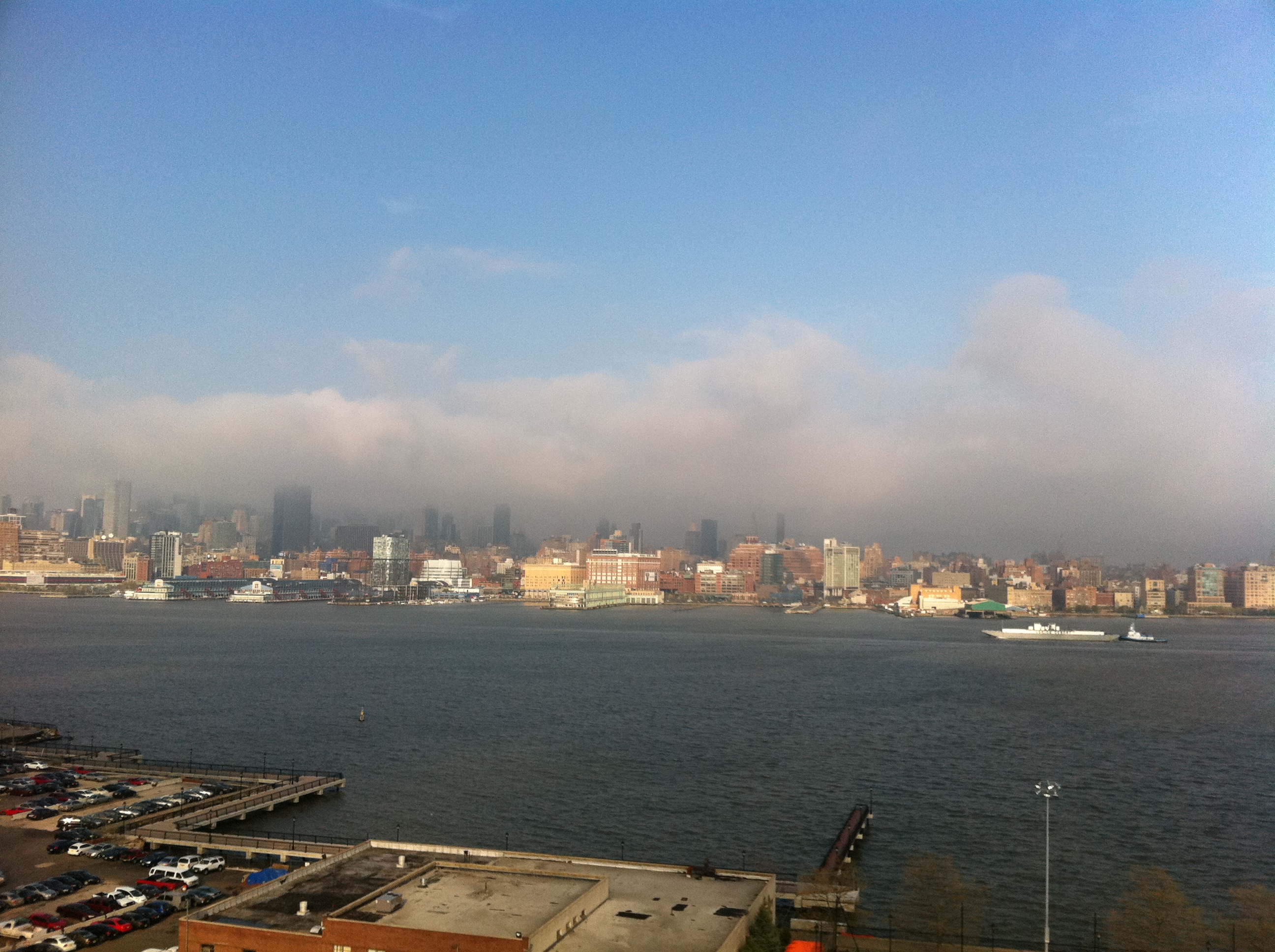
pic by Philip Orton

View of the fog over Manhattan, from sunny Hoboken, 5:35 pm

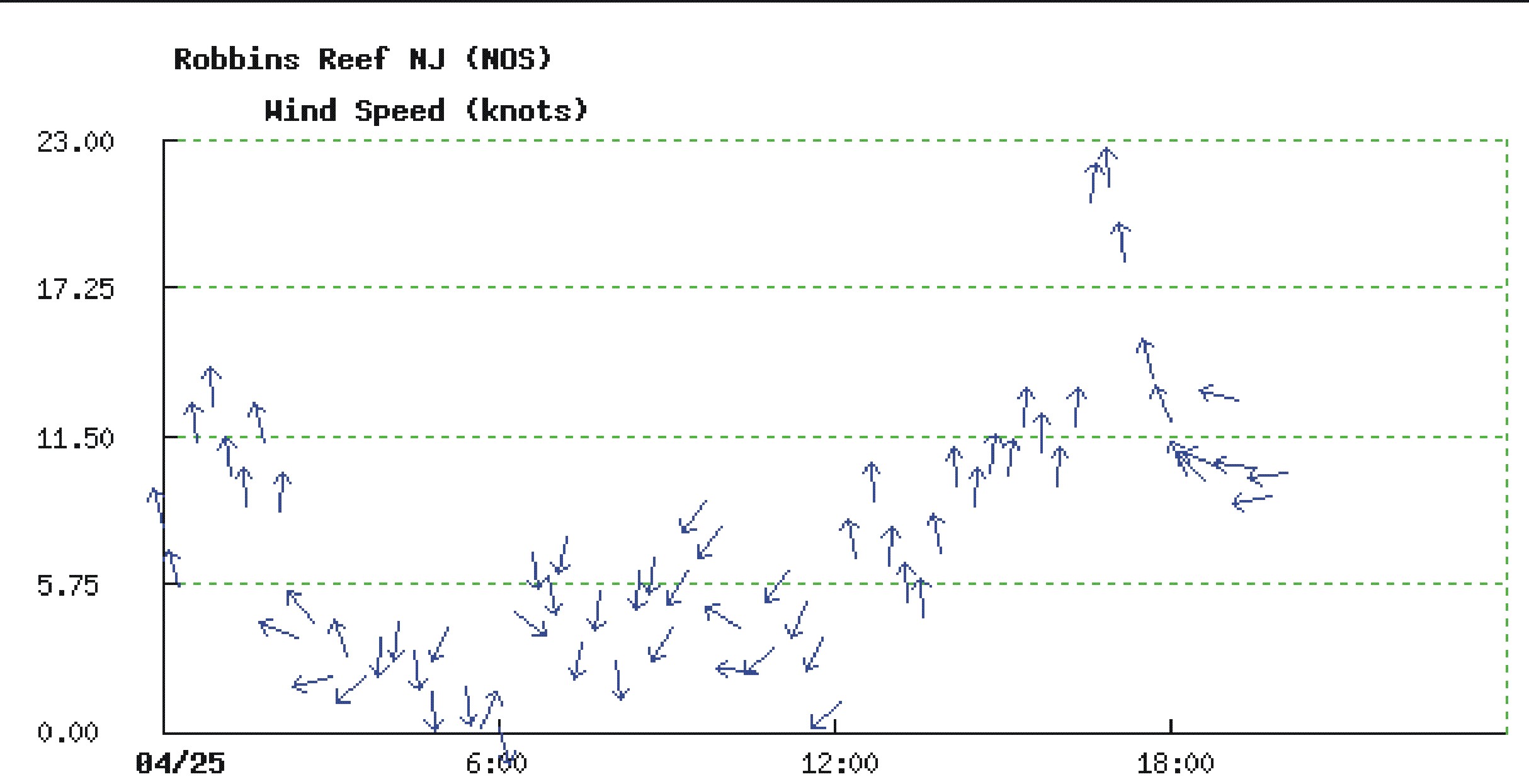
The fog was a marine layer, roughly 300 m tall (aka skyline sea breeze), which plowed in over Brooklyn.  Winds at inland sites were variable and light, and abruptly turned onshore as the foggy layer approached — more or less like a cold front delivered from the ocean.  Ocean waters offshore are still only 52 degrees F, and keep the ocean breezes cool at this time of year.

Wind directions as the day progressed (arrow direction - up indicates wind is from the south) and wind speeds (x-axis) at Robbins Reef lighthouse in New York Harbor.

So why was this marine layer foggy, when most the time it is invisible?  It likely has to do with the extremes we are seeing — the ocean just offshore is still very cold, yet we have a particularly warm, humid air mass moving in from the south these past few days.  As this warm air rides over the cool marine waters off our shores, it cools rapidly, and because cool air can hold less moisture, condensation occurs — and that’s your fog.

Posted in photography, weather | Tagged , , , , , | 1 Comment